
Biologically speaking, before you became who you are, you were a zygote—a single fertilized cell with mind-bending potential. Soon afterwards – within a matter of hours – you were a morula (Latin for “mulberry”). A morula is comprised of 60 or more cells, all lumped together. At this point in your biological development, you looked like a microscopic mulberry. Your biological potential, originally housed in the DNA of parental gametes, was still unthinkably vast, yet slightly reduced.
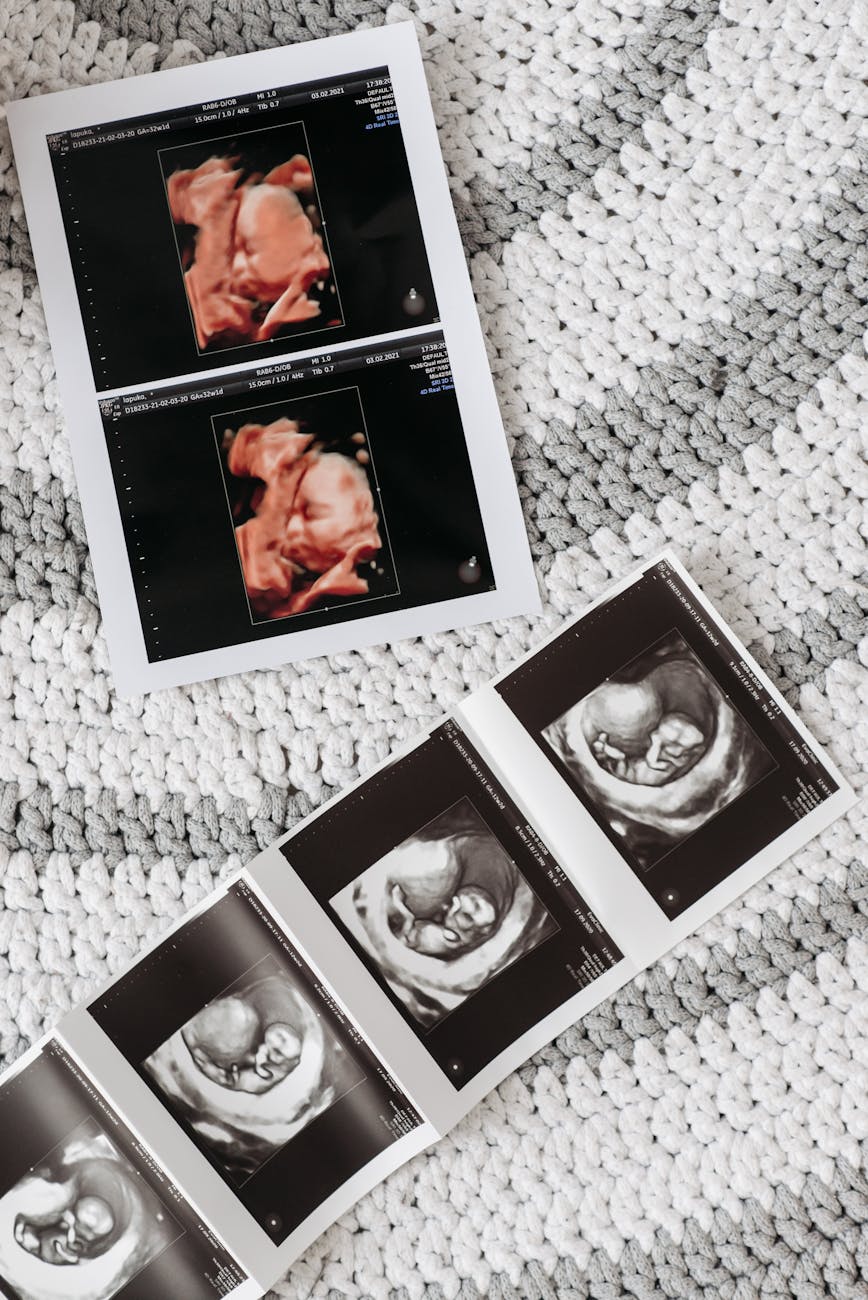
By about five days into your biological journey, you became a blastocyst. At this point, you were comprised of something like 150 cells. At each stage of development, you became bigger and better defined, but always at the cost of potentiality. You started with the potential to be anyone within the confines of the DNA in your cell. Since there are 3.2 billion nucleotide pairs on our chromosomes (humans have 46 of them), and every one of those pairs can combine in four possible ways, that is a lot of potential. By day 5, the billions of different versions of you that had been possible had decreased. You were on your way to becoming yourself.
You were an embryo before you knew it—quite literally. Significant development occurred during the embryonic phase, which means that your potential (though still vast) has been further narrowed. Nine weeks in and you are a fetus. You’re beginning to look like a human being and even like a particular human being, but advances in development always comes at the cost of diminishing potential.
By the time you were born, your biological potential (for example, the color of your eyes, the shape of your face, the complexion of your skin, your body type) was narrower than it was when you were a morula. With each step of development, the breadth of potentiality is diminished. In return for this expenditure of potential, you became more substantially (and not just potentially) yourself.
I am now a 67-year-old man. My potential as a biological creature has been significantly reduced from when I was a child. I have paid (and continue to pay) the piper of potentiality. What I have received for that payment has been me—not a potential me, but the real-deal, existential me.
I hope I’ve been worth the price.
But even though I am past middle age, I am still becoming. This seems a hugely important fact about me and about all humans. It’s true that my potential has been diminished by the volitional choices I have initiated and the biological changes I cannot stop, but it has not been exhausted. I have become a particular me rather than many possible versions of me, but the particular me is not yet fixed. I can still change, grow, and become. The potential to become something I am not now is at the heart of what it means to be human.
(What I’ve written in the paragraph above is not meant to convey the idea that I am who I am solely on the basis of my own choices. My choices are an important factor in my development, but hardly the only one. They are, however, the one for which I am responsible.)
Humans never stop changing. Still, an older person, say someone my age, might say: “Of course, I changed when I was younger, but not anymore. I settled into who I was going to become a long time ago.”
Nonsense. People continue to change, regardless of their age. Their bodies change whether or not they want them to. Brains grow and atrophy. Muscle mass increases for a time, then begins to decrease. Our bodies replace billions of cells every day. We are always developing into something different than what we are now.
Change on the biological level is not the only kind of change humans experience, nor is it the most important. Humans are a biological/spiritual hybrid, and transformation happens across both areas. Man (in the generic, Genesis 1:27 sense, comprised of both male and female) is becoming something that he/she is not now, but whether that something is godlike or devilish depends on the individual.
That is what C. S. Lewis had in mind when he said: “It is a serious thing to live in a society of possible gods and goddesses, to remember that the dullest and most uninteresting person you talk to may one day be a creature which, if you saw it now, you would be strongly tempted to worship, or else a horror and a corruption such as you now meet, if at all, only in a nightmare. All day long we are, in some degree, helping each other to one or other of these destinations.”
A serious thing indeed. I am progressing toward an end in which I will be joyful and joy-inspiring or wretched and revolting. That I will be one or the other is certain. Which I become depends on my attitude (in the sense used by pilots) toward God—my orientation in reference to him. If I am moving toward him, I am moving toward godlike joy. If I am moving away from him, I am headed toward wretchedness and ruin.
This is why Lewis claimed: “There are no ordinary people. You have never talked to a mere mortal. Nations, cultures, arts, civilization—these are mortal, and their life is to ours as the life of a gnat. But it is immortals whom we joke with, work with, marry, snub, and exploit—immortal horrors or everlasting splendours.”
I will still be in process of becoming when I die. It is the resurrection that will seal who I will become, though the process of growth and change may (and, I think, will) continue. To be human is to change. God sent his Son so that the change might be into eternal joy and not unending wretchedness.
When he looks at me, I hope he thinks the price was worth it.


 The Way Home
Leave a comment