
In 1993, while working for Calvin College, Nick Hengeveld founded Bible Gateway. In the 32 years since, the Bible Gateway site has been visited billions of times. It attracts almost 90 million visits a month from countries all over the globe. While more searches are initiated by Americans than any other country, over three million searches a month are performed by Filipinos. Colombians and Mexicans add another million searches each.
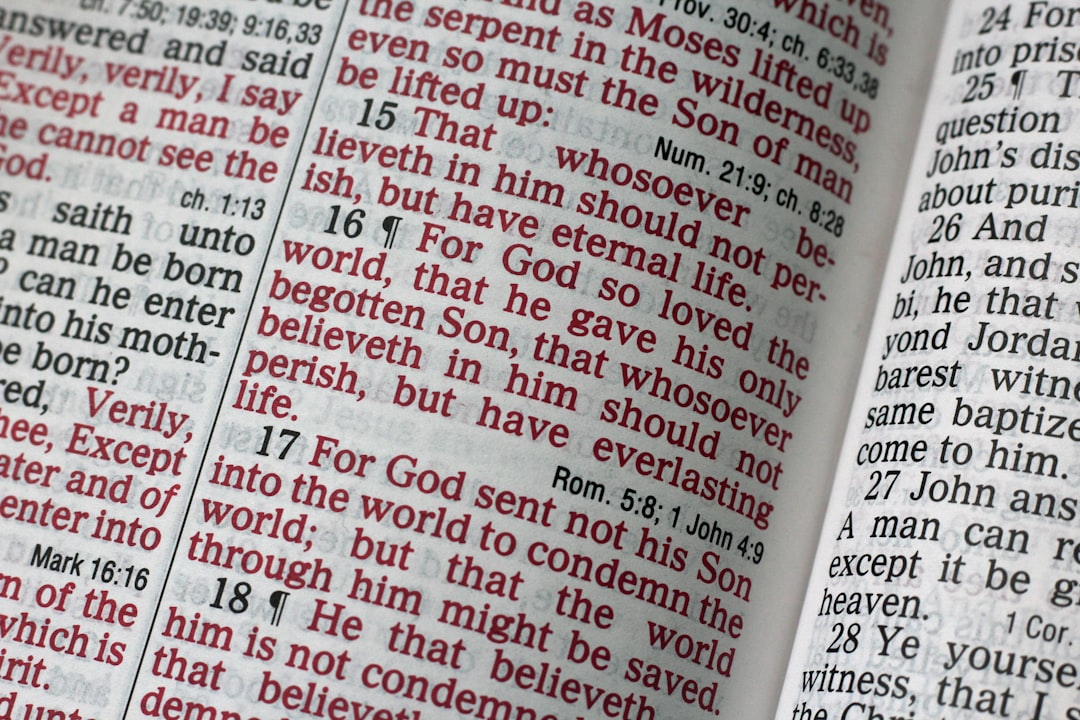
According to Bible Gateway, the Bible verse that is most often searched is John 3:16, with over 2 million searches every month. John 3:16 is the world’s most beloved Bible verse, but what does it mean? Why does it start with the word “For”? Does perish refer to hell? Does eternal life refer to heaven? What does it mean that God gave his Son?
The word “For” at the beginning of the verse signals that an explanation (in this case, of the claim that “the Son of Man must be lifted up, that everyone who believes in him may have eternal life”) is being offered. In typical Johannine style, the phrase “the Son of Man must be lifted up” has a double meaning: the Son of Man must be exalted and the Son of Man must be crucified. John sees no conflict between the two. In fact, he sees the crucifixion as the fullest revelation of Christ’s glory.
John tells us that “God so loved the world that he gave his one and only Son.” Sadly, as N.T. Wright has pointed out, much evangelical preaching sounds as if “God so hated the world that he gave his one and only Son.” Nothing could be further from the truth. God loves the world. He loves winners and losers, saints and sinners. He loves the believer and the atheist, the ardent church-goer and the guy who has never darkened a church door.
Because God loved the world in this way – a literal translation might go, “God loved the world thus” – he gave his only Son. “Thus” clearly points first to the lifting up of the Son (the crucifixion), but the giving of the one and only Son did not start there. Perhaps creation itself is the result of another giving of the Son (see John 1:3, 10 and Colossians 1:16), and he was certainly given to the world in the incarnation (John 1:14).
The word “whoever” (repeated in verse 18 and throughout this Gospel) is important. Whoever includes “everyone believing in him,” as a literal translation might go. I’ve known two different drug dealers who prayed from their jail cells for mercy. Their prayers arose from troubled souls through drug-distorted minds and went something like this: “God, if you’ll get me out of this, I will believe in you.” Both men got out of their trouble in remarkable ways, and both men believed. Decades later, they are still believing. Whoever means whoever.
The words “believes in him” deserve careful attention. A strictly literal translation would go, “believes into him.” This is a Johannine phrase, used only in this Gospel and in the First Epistle, but used more than twenty times. What does it mean to “believe into” Jesus, and why did John latch onto this preposition?
This preposition (εἰς) implies motion toward or into something. I suspect that John wanted to convey the idea that the life of faith is not static. You don’t believe in Jesus from a distance. Belief moves you into him, into fresh experiences of his wisdom, kindness, and grace. Into a fresh awareness of your sins and weaknesses, and fresh dependence on his righteousness and strength. The life of faith is always calling us, as a line from C. S. Lewis’s The Last Battle put it, “further up and further in.”
Jesus frequently spoke of believers as followers. The chief thing about followers is that they follow. They don’t just sit, not even in a pew. Their motto is, “Further up and further in.” If we stop moving forward, we can be sure that a distance will grow between us and our savior since he has not stopped moving.
Those who believe into Jesus will not perish. That word can mean “kill” in the active voice. In the passive and middle voices in can mean to perish, to be lost (it is used of the lost sheep in Jesus’s parable) and to be ruined. It can have the idea of loss or ruin through one’s own actions (the execution of a priest’s daughter who had taken up prostitution, for example) or neglect, by “trifling away one’s life.”
Hell is not mentioned in connection with the word “perish,” nor is heaven mentioned in connection with “eternal life,” though it is possible that Jesus had both in mind. But perishing (or being ruined) begins long before hell, just as eternal life begins before reaching heaven.
Setting “perish” in apposition to “eternal life” recalls Moses’s offer more than a millennium earlier: “I have set before you life and death, blessings and curses. Now choose life …” John understood that the way to choose life is to believe into the Son whom God had sent.


 The Way Home