The Bible uses a variety of terms for wrongdoing, wrongful not doing, and wrong thinking. There is the umbrella word “sin,” which includes intentional sins (Hebrew, with a high hand) and unintentional ones (not with a high hand), along with terms like “transgression,” “trespass,” and “iniquity.” In Psalm 51, we find the words “transgressions,” “iniquity,” and “sin” in consecutive verses.
Are all sins (transgressions, trespasses, and iniquity) equally serious? It has often been suggested that this is true, based on James 2:10 (“For whoever keeps the whole law and yet stumbles at just one point is guilty of breaking all of it”) and on Jesus’s statement “that everyone who looks at a woman with lustful intent has already committed adultery with her in his heart” (Matthew 5:28). However, Jesus himself distinguishes one sin from another, and refers to one as “greater” than the other (John 19:11), and confirms that there are degrees of punishment (Mark 12:40; Luke 12:47-48).
What started me thinking about this (again – I’ve wondered about it before) was my time in prayer and scripture this morning. I read Psalm 19 and spent a few minutes thinking and praying about it. In verses 12-13, the psalmist writes, “But who can discern their own errors? Forgive my hidden faults. Keep your servant also from willful sins; may they not rule over me.”
David mentions errors, faults, and willful sins. He acknowledges the difficulty humans have in perceiving their own errors. Perhaps I can see your errors, but I can no more see mine than I can see my own eye. Without a mirror – but you could be my mirror – I will not discern my own errors.
I have hidden faults. I did not hide them – or if I did, it was so long ago that I have forgotten about them – and I do not know what they are. But my ignorance is not the same thing as my innocence. These faults are hidden from me, yet they can still cause harm—sometimes serious harm. It is possible that these faults were hidden in me by my parents, or my upbringing, or by Adam’s rebellion. How they were hidden is not the important thing. That they be forgiven, exposed, and eliminated is.
The Psalmist asks God to keep him from “willful” sins. Other versions translate that as “presumptuous,” “flagrant,” and “insolent.” Unlike the faults mentioned in the previous verse, these sins are not hidden from me; they are hidden by me. Nevertheless, though these sins are known by me, and I choose to do them, that does not mean that I approve of them. Sins that result from addiction are a good example. A person may choose to purchase an illegal narcotic, look at a pornographic picture in order to lust, or use filthy language (verbal habits are among the toughest to break) and yet hate himself for doing so. What David feared has come to pass in that person’s life: the willful sin has come to “rule over” them.
Regardless of whether we are dealing with faults that are hidden from us or sins that are hidden by us, our hope of getting free from them hinges on our willingness to humble ourselves. A humble person can discover a hidden fault through the help of a loving friend (or the malice of a hateful enemy), do something about it, and be released from its control. But a proud person will turn to denial and excuses. When it comes to willful sins, humility is of the utmost importance. God alone can break the power of willful sin over us, but without our humble cooperation that work will only be performed by death or disaster.
So, are all sins equally bad? No. The biblical evidence, from the types of Levitical sacrifices to the teaching of Jesus, suggest that some sins are worse than others since some sins cause greater harm and call forth greater punishment. To acknowledge that all sins are not equally bad, does not mean that some sins are good, or even tolerable. Every sin, whether great or small, creates a barrier between us and God, and separation from God is the essence of spiritual death. St. Paul put it this way: “the wages of sin is death” (Romans 6:23).
I frequently say to people going through some kind of trouble, “You’re being tested. But it is not a test of your worth. You are priceless; that has already been determined. It is not a test of how smart you are, or how strong, or how well you respond under pressure. It is a test of your faith.”
This idea is found throughout Scripture, but never is it more clearly stated than in James 1:3: “…the testing of your faith produces perseverance.” The difficulties we experience are a test of our faith, not our intelligence or our proficiency. Will we trust the Lord in this new difficulty, or will we trust ourselves, or will we put our trust in the cultural gods de jour?
I have said something like this to many people. This week, I needed to say it to myself.
It’s not that I endured some earth-shaking, soul-disturbing trial. I’ve not been diagnosed with some terrible disease, my wife hasn’t left me (or threatened to), and I don’t need to worry about where my next meal is coming from. The tests that came my way are smaller, everyday kinds of trials—the kinds all of us face.
Trials do not need to be big ones to be a test of faith. Any trial can reveal faith, as a calculus test reveals math proficiency. In the test, do I look to God and entrust myself and my situation to him, or do I look to myself or to some other source of help?
Over the weekend, my laptop began shutting off without warning, as if the battery was depleted, though it was still half-charged. This had happened before, and I had replaced the battery. Now it was happening again.
Windows offered an error message and I followed the QR code to suggested fixes. Atop the list was, “Reset the BIOS.” I did this almost without thinking, though I took care to save my personal files. But because I was using an old, local version of Microsoft Office rather than the 365 subscription the church offers, I (temporarily) lost 1,000 email addresses and many thousand emails. I also lost (temporarily) a very expensive Bible scholar’s software package and my wireless connection to our very obstinate printer. It took me days to get this worked out.
Before my computer was fully functional, my car suddenly began running roughly. Gas mileage dropped drastically. I took it to the dealer, who informed me that the car needed a ring job. The car they would offer $7,000 for as a trade-in (if it were in excellent condition) would cost $5,100 to repair. What was I supposed to do? What would be the wise move? The money didn’t worry me. Making a foolish decision did.
When the computer lost (permanently, for all I knew) important programs and data, I started wracking my brain for how I could fix the problem. Did I need a specialist to look at it? When the car repair estimate came back – once I got over the shock – my mind began racing around, looking for a solution. What I did not do in either case, at least right away, was look to God and entrust myself and my situation to him.
I’m ashamed to say that I didn’t practice what I preach—at least, not immediately. Instead, my mind raced, I went searching for solutions, and I got stressed out. But the next morning, it dawned on me that these run-of-the-mill, everyday kinds of hardships were a test of faith. I almost laughed. Would I trust God and give him thanks? I would.
You don’t need to be tried like Abraham – told to sacrifice your own son – to have your faith tested. All you need to do is lose 1,000 email addresses or face a difficult decision without enough information to make a wise choice.
Whether we find ourselves in ordinary situations like those, or extraordinary situations like Abraham’s, it is important to remember that it is our faith that is being tested, not our worth or strength, or any such thing. Will we trust God? That is the question.
If we pass the test, whether in small or great things, we will reap immediate benefit. Our faith will be strengthened, and we will find it easier to trust God in the next trial. Each time we pass such a test, our faith (which is worth more than gold, according to St. Peter) is attested, and we become more confident and joyful—even in challenging times. The payoff for passing the test of faith truly is worth more than gold.
The songwriter Michael Card captured something of this in his song, In the Wilderness. He wrote of God, “He calls His sons and daughters to the wilderness. But He gives grace sufficient to survive any test. And that’s the painful purpose of the wilderness. And that’s the painful promise of the wilderness.”
When Christians are in the wilderness, whether the wilds of illness, financial challenge, or relational struggle, it is faith that is being tested. If we will look to God and entrust ourselves and our situations to him, we will pass the test. That will bring God glory, but it will make us stronger and will open the door to joy.
In the summer of 2016, Karen and I were on a 70,000-acre lake in Quebec we’d never been to before. On our third or fourth day there, I went out one morning by myself. The sun had not yet broken the horizon, but the east was turning colors and steam was rising everywhere off the lake.
It was so beautiful that I fumbled around for my camera and started taking pictures. Because I wanted to reach a particular spot before the sun got up, I didn’t want to stop the boat. So, with the outboard at full throttle, I’d take a picture, look at it in the view screen, then take another one, look at it, then take another.
After about five minutes of this, I looked up from my camera and saw through the mist that I was traversing a straight that opened into a much larger arm of the lake. I suddenly realized I didn’t know where I was. The landscape was completely unfamiliar. I was lost.
William Starky on Wikimedia Commons
When you don’t know where you are, you will not know how to get where you’re going. I immediately stopped the boat and sat still on the glassy water. I got out the rudimentary map the camp owner gave us – it was more like a restaurant placemat than a real map – and tried to figure out where I was. I needed one of those maps you see at highway rest areas, the ones with an arrow that states, “You are here.”
If there were a map with an arrow helping 21st century Christians know where they are at, where would it point? One biblical answer is that it would point to a location behind enemy lines. “The whole world,” according to St. John, “is under the control of the evil one” (1 John 5:19). We are in this challenging place to carry out a planning and preparation operation – one could call it a propagandacampaign, in the positive sense of the term – in advance of the king’s arrival. We do this by declaring the king’s praises against the backdrop of changed lives that are full of good deeds (see 1 Peter 2:9-12).
(For a biblical illustration of how this works, read the wonderful story in Mark 5:1-20. Jesus finds a man in Gentile-controlled territory who is under the domination of dark powers and sets him free. The man pleads with Jesus to take him out of this dark place. But Jesus tells him to stay and gives him an assignment: to announce to his own people how much the Lord had done for him. He carries out this mission – this propaganda campaign – which forces people to think. The result is that when Jesus returns to the area (Mark 7:31-37), the people who previously wanted nothing to do with him now say about him, “He has done everything well.” This is 1 Peter 2:9-12 played out before our eyes.)
To say that we are behind enemy lines is not the only way to answer the question of where we are. For the Christian, the “You are here” arrow points to a fortress named, “In Christ.” That phrase is theologically rich and nuanced, but in one basic sense it is like saying we are in Company C, Third Battalion, Reconciliation Brigade. We’re not here to get rich. We’re not here get comfortable. We’re not here to get respect. We’re here to serve the king.
People who know where they are can get to where they are going. But there is more to it than knowing where we are. It also helps to know when we are. In the arc of God’s great story, when are we?
We are between D-Day and VJ Day. Gettysburg is past, but Appomattox is still in the future. In case these historical references are unclear, we live between the turning point and the victory, between the decisive battle and the usurper’s final defeat. We live between the triumph of the cross (see Colossians 2:15) and the return of the King.
This way of describing the where and when of our situation may be a little unnerving. Who wants to live in a war zone? And what if we fail at our mission? The stakes are frighteningly high. Wouldn’t it be better to forget these alarming realities and retreat into the comforting illusion in which most people live?
It would not be better. Our situation is more secure than we may think. It is true that we are in enemy territory, but we are also in God’s hands. Jesus said, “I give them eternal life, and they shall never perish; no one can snatch them out of my hand. My Father, who has given them to me, is greater than all; no one can snatch them out of my Father’s hand” (John 10:28).
Yes, we are in a war zone, working behind enemy lines. But even here we are secure in the hand of God. And though we will someday leave the war zone, we will never leave the security of his hand.
What are we doing here? What does God want us to accomplish? 1 Peter 2:9-20 can help us understand our role in God’s world.
A couple of months ago, I learned that our personal information had been hacked from a company that handles medical information for hospitals and doctors—a company I’d never heard of. The very next day, my credit card company asked me if I had just purchased clothes in South America. I also learned that my social security number had been hacked. With that, a person could apply for a driver’s license, credit cards, and loans. He could open bank accounts and request benefits.
What would you call a person whose life and benefits depends on an identity they weren’t born with, an identity that belongs to someone else? You might call them an illegal alien, or a con-man, or … a Christian.
That is what we saw last week, when we looked at 1 Peter 2:4-9. Our identity comes from Christ. We are who we are not because of our birth but because of our rebirth, not because of our name but because of the name of Jesus, not because of our accomplishments but because of his. We’ve taken our identity from him.
That identity determines our mission. Who we are determines what we do. Imagine that you are hired by a large transportation firm. Who you are – your classification as a driver, a diesel mechanic, a logistics engineer, or a comptroller – will determine what you do. If you are a comptroller, you won’t be maintaining and repairing engines. If you are a mechanic, you won’t be scheduling loading times and laying out routes. Who you are shapes what you do; your identity molds your mission.
Our mission, as people who share Jesus’s identity, is (verse 9) to proclaim the praises of the one who called us out of darkness into his wonderful light. In other words, our mission at school, in our workplaces, at our homes, and in our neighborhoods – wherever we have been stationed – is an information operation. We spread the news about God.
How do we do that? Do we just walk up to someone on the street and say, “Hey, the Creator God is restoring his creation, fixing everything that’s broken, getting rid of evil forever. He’s already started by coming into our world in the person of Jesus Christ. The proof of that is that Jesus was raised from the dead.”
If you get the chance to say those things, take it! But proclaiming God’s praises doesn’t start on the street. It starts when God’s people gather to worship. With his Jewish background, Peter certainly would have thought about worship gatherings in this way. When the people of God got together for their appointed festivals, they proclaimed God’s praises. After the exile, when synagogues began appearing all over the world, they gathered there and declared his praises. And that carried over into the church’s gatherings (as we see, for example, in 1 Corinthians 14.)
When we gather, we rehearse the praises of the Lord. We do this in our Scripture readings, like those today from Philippians 1 and Matthew 5. We do it in our songs and in our prayers. Regularly gathering to declare his praises is mission critical.
Does that mean we don’t need to do personal evangelism? Who said anything about needing to do it? We get to do it. Not everyone is gifted to be an evangelist, but everyone who belongs to Jesus gets the opportunity to declare his praises.
If you are one of Jesus’s people, that’s your mission – whether you decide to accept it or not. You are on the advance team, bringing the news about God to people who don’t know about him. And it is good news.
But our mission is more complicated than just bringing news about God to people who have never heard it. We are bringing news about God to people who have misheard it. They think they already know about “God and those Christians.” And what they think they know is that Christians are self-righteous, condemning, unhappy people—and that their God must be just like them.
I received an email a couple of years ago from one of these people. She was sure that I would be angry because someone dared to disagree with me. When I wrote back: “I don’t mind when people disagree with me. We all need to think for ourselves,” it caught her off-guard.
She countered with something like, “Well, your God sends people to hell when they disagree with him.” She was really mixed up. She didn’t see that she was the one who was angry because someone disagreed with her. I suppose I’d be angry too if I believed what she believes.
The point is this: the people to whom we declare God’s praises are not blank slates. They already have an opinion, and it is often a negative one. The territory in which we carry out our mission is growing more hostile all the time. A case in point is the guy who said to me (and this is a direct quote), “America is not being torn apart by politics OR by the idolatry of politics, but by the idolatry of evangelists” – I’m pretty sure he was including me – “trying to wrest all control for their privilege and benefit.” Wow!
Because of my newspaper column, I’ve heard from many people who knowwithout a doubt that Christians are selfish and hateful and that their God is spiteful and unworthy of devotion. When responding to these people, I have chosen my words carefully, but words will never be enough. They need to see what the people of Jesus look like in action.
That’s what Peter thought. He considered it our mission to speak and to act in ways that will move people to give God a hearing. This is verse 11: “I urge you, as aliens and strangers in the world, to abstain from sinful desires, which war against your soul. Live such good lives among the pagans that, though they accuse you of doing wrong, they may see your good deeds and glorify God on the day he visits us” (1 Peter 2:11-12).
Peter does not say, “Speak such eloquent words that people will glorify God,” but rather, “Live such good lives…” Their lives are different because they abstain – the idea is that they keep away from – “sinful desires.” That translation might give the wrong idea. The word “sinful” produces in our minds a list of bad actions. Peter, however, does not use the word “sinful” but the word “fleshly. And he is not talking about “actions”; he’s talking about “desires.” That’s important. He doesn’t want Christians to be driven by the same desires that drive everyone else.
We’re supposed to be different, and not just in what we do but in what we want. One of the clearest marks of spiritual formation in Christ is that we no longer want what we used to want. Our desires are being changed through union with Christ, just as our identity has been changed.
We don’t do what everyone else does and we don’t want whatever everyone else wants. That’s the negative side of the equation (what we don’t do). The positive side (what we do) is live beautiful lives. The word the NIV translates as “good” carries that idea. These are lives that are not just morally upright but are beautiful and full of good deeds. The deeds we do in verse 12 confirm the praises we declare in verse 10, so people not only hear; they see.
Timothy Dalrymple is the President and CEO at Christianity Today. In college, he was a top NCAA gymnast until he broke his neck. He then changed direction, went off to Harvard (where he found people who thought they knew all about Christians and their God), and faced tough questions about his faith.
The person who helped him most was not some brilliant and eloquent Christian apologist; it was his dad, whom he described as “a genuinely loving, faithful, righteous person.” He said, “I saw in his life something undeniably true that I couldn’t explain away.” A sermon you see stays with you longer than one you just hear.
Let’s recap: Our mission is to declare God’s praises from lives that are (1) different and (2) beautiful. They are different – again, this is important – because our desires are different from most people’s. And they are beautiful because they are full of good, surprising, generous deeds – things that other people wouldn’t do.
I’ll give you an example. Christians Ricky and Toni Sexton were at their home on April 6, 2000, when Dennis Lewis and Angela Tanner, who were fleeing the police, came roaring into their driveway. Toni, who was outside with the dog, was forced back into her home at gunpoint, and a 36-hour standoff with police ensued.
The Sextons, who were being held hostage in their own home, didn’t act like you’d expect hostages to act. They were different. Their deeds were beautiful. They listened to their captors’ troubles, fed them, showed them gospel videos, read to them from the Bible, and prayed and cried with them. When police negotiated the release of Ricky, who had Lou Gerig’s disease, he refused to go because his captors were thinking they had no alternative but to commit suicide.
The fugitives eventually surrendered to police but, before they did, the woman left $135 and a note for the Sextons that read: “Thank you for your hospitality. We really appreciate it. I hope he gets better. Wish all luck & love. Please accept this. It really is all we have to offer. Love, Angela and Dennis.” As a condition of their surrender, they asked to speak to a state police chaplain.
That was what it looked like for Christians to live a different and beautiful life in an extraordinary circumstance. But what does that look like in ordinary circumstances? Peter describes what it looks like, starting in verse 13 and running through 3:7. If you wonder how to go about living differently and attractively, Peter is going to tell you. There are two things to note before we look at it.
First, it really is a different kind of life we’re talking about. It’s not the kind of life the average American (or Canadian, Zimbabwean, or German) is living. If we just live average lives, no one will pay attention when we declare the praises of God. It is essential to the plan that our lives look different.
A few years ago, there was a guy at Columbia University named John Reider who was different. While his friends were playing video games and partying, he was cooking. Cooking is his hobby, so he started making five to eight course meals and inviting people to his rooms to share them. They’d sit around the table and enjoy stimulating conversations and a great meal.
The student newspaper heard about what John was doing and published a story, which the New York Post picked up. John soon found himself with a wait list that was months long and included bankers, lawyers, restaurant owners, and magazine editors. They were coming to his dorm to enjoy a meal and conversation. When he was asked about it, John said the idea was never to make it big, but to make it different. He was on to something. That’s God’s idea too.
If we will only do what Jesus and his apostles told us to do, we will be different. Speaking well of people who speak badly of us – that’s different. Praying for people who are out to get us is different. So is helping people who hurt us. Those are just a few of the things Jesus told us to do.
Second, while there are many things that make us different, there is one that Peter emphasizes repeatedly. He sees it as a primary characteristic of Jesus’s people and identifies four specific relationships in which it manifests itself: our relationship (this is 2:13ff.) to the government (that is a hot-button issue right now, but it was a hot-button issue when Peter wrote this letter); to our bosses (2:18ff.); to our spouses (3:1-7); and to the church (5:1-5).
When I have spoken on this subject in the past, it has made people uncomfortable. Once, a woman came up to me the moment the service was over and said, “When you started speaking, it took everything I had not to get up and walk out.” Even talking about this can upset people.
What makes it worse is that I must use the “s-word.” (Not that “s-word” – I don’t say that.) But using the other one upsets people too. The word is “submit.”
Peter says (this in verses 13-14) that Jesus’s people should submit to every human authority through the Lord, whether that authority is the emperor or the people who govern at more local levels. After mask mandates, vaccine requirements, and heated elections, we don’t want to hear about submitting to those in authority. It’s not that we’re unwilling to obey God’s word … but God couldn’t really mean that we should submit when the future of our nation is at stake!
What do you think those early Christians thought when they read Peter’s letter? Their country, their towns, had been overrun by a foreign power. The taxes they were forced to pay supported the foreign troops that patrolled their streets! And Peter told them to submit! Why? Because submission is essential to the mission.
We must remember that we are not private agents. We serve the Kingdom of God. Our objective is not to maintain a way of life – not even the American way of life – but to prepare for the arrival of the King. That preparation includes, among other things, silencing the ignorant talk of foolish people (v. 15) – and there has been a lot of ignorant talk about Christians in our day. We will never silence it by demanding our rights; we will silence it by doing good.
(As an aside, in a democracy we have opportunities to do good that were not available to Peter’s first readers. We can vote, organize, protest, run for office, and more. We should take advantage of those opportunities when doing so is one of those good and beautiful deeds. But if we allow current cultural concerns to drive the mission from our minds, our agency for the Kingdom of God will have been neutralized.)
We’ve already seen that we are supposed to be different. Being submissive is radically different. It is one of the marks of God’s kingdom agents on earth. They submit to a government for the sake of the mission. They also submit in the workplace (this is verse 18) for the same reason. In Peter’s day, the largest employment category was “slave.” So, Peter told slaves to submit. If the largest category had been, as it is in America, what the Bureau of Labor statistics calls Healthcare Support Occupations (which share some of the duties of a first century slave), Peter would have told health care workers to submit.
But why? Why should they submit? Because (vs. 19) they are mindful of God. They know who they are serving. They remember the mission. They are working for the King.
Submission is the mark of the Jesus-agent in every area of life: social life (with government, vv. 13-17); work life (with bosses, vv. 18-20), domestic life (in families, chapter 3:1-7); and spiritual life (in church, chapter 5:1-5). Why must submission be the mark? Why couldn’t it be something else—anything else: wisdom, or courage, or, for that matter, stubbornness? Because we have taken the identity of Jesus, whose submission to the Father has vanquished the powers of darkness and won for us eternal life.
If we identify with Jesus in our submission, we can be wise and courageous like him. And we can even be stubborn when some authority (in society, at work, at home, or in the church) requires us to disobey God. Being submissive does not mean being a doormat.
Our success depends on keeping the mission in mind: to declare the praises of our king while leading lives that are full of good and lovely deeds. If we live that way, we’re going to be different, not because we are trying to be different but because we are serious about being like Jesus.
Being different is not the goal; it’s the result. When people make it the goal – and I’ve seen it happen – it gets in the way of the mission. And when I’ve seen it, the thing I’ve noticed most is pride. Pride makes submission impossible. Pride gets in the way of people coming to God.
The New Testament scholar Scot McKnight says that the first task “for Christians in society is to live before God in love and holiness in such a way that culture sees the radical difference between the two worlds.”[1] That’s just what Peter has been saying.
I earlier told you about Ricky and Toni Sexton who behaved differently – beautifully – when they were taken hostage. They would not have been different in that extraordinary situation had they not been different in ordinary situations. That surely was not the first time they did good and beautiful things for the sake of the king. They lived the mission. So must we.
What good and beautiful thing – what different thing – is God putting into your mind to do? Will you submit to the Lord, trust him, and do it?
[1] McKnight, S. (1996). 1 Peter (p. 141). Zondervan Publishing House.
We want a king over us. Then we will be like all the other nations. (1 Samuel 8:19c-20a)
God’s plan to bless all peoples on earth (Genesis 12:2-3) required his chosen nation, his servant Israel, to be different from every other nation in the world. Success hinged on that difference. If Israel would follow God’s ways instead of imitating the people around them, their blessedness would be apparent to everyone.
At times, the difference between the Jews and their neighbors was subtle and difficult to see. At other times, the difference was impossible to ignore. For example, Israelites had every Saturday off work. That was noticeable and, I suspect, enviable. Further, every employer in Israel was required to give workers extended time off for each of the three great yearly feasts – we’re talking about weeks and weeks. Who doesn’t like time off?
Another conspicuous difference between Israel and their neighbors: in Israel, newlyweds were exempt from military service for an entire year. If there had been Facebook then, one can imagine a twenty-year-old Israelite man posting pictures of himself relaxing by a fire, holding hands with his bride as they walked along Galilee’s lakeshore, and putting their feet up on a Sunday afternoon. It was enough to make an Amalekite army grunt green with envy.
Other differences may not have seemed so appealing. Jews ate differently – no bacon double cheeseburgers ever! They were required to fast for special days. They not only didn’t have to work on Saturdays; they couldn’t work, even if they were farmers, and the nasty weather of the previous weeks meant they needed to get their crops out before they rotted on the vine.
Being different has its perks. It also has its challenges. In Samuel’s day, Jewish people faced a particular challenge. Their nation was not only different in its diet and work schedules. It was also different in its governance. All the other nations had kings, but Israel was ruled by God through judges.
That had worked well for them for many decades. The chronicler records that the Philistine Confederation, which had challenged and oppressed Israel for a generation, had been subdued, and Israel was at peace with its neighbors (1 Samuel 7:13-14). Nevertheless, the Israelite people believed they were missing out. Other nations had kings, and kings were cool – impressive, striking, celebrated.
The fear that one is missing out is as old as Adam and Eve. The desire to have what others have, and the belief that having it will secure and satisfy us, has been part of human experience throughout history. It is also the reason for much unhappiness.
People not only want what other people have; they want what other people want, a fact that has been consummately exploited by Madison Avenue and by social media influencers. Such people know that having the new car or the latest look won’t secure or satisfy anyone and, in fact, they are counting on it. The last thing they want is for people to be secure and satisfied.
But that is what God wants for people, which explains the significant emphasis and instruction on desire in the biblical writings. For example, the last of the Ten Commandments (or Ten Words) instructs us not to covet. This prohibition is not intended to deprive God’s people of any good thing, only of dissatisfaction and unfulfillment.
St. Peter warns Jesus’s people to keep their distance from “fleshly desires,” which he says “war against the soul.” When that war has been waged, the soul is likely to find that her security and satisfaction have been plundered, and the Trojan Horse that allowed the thieves to gain admittance was fleshly desire.
We warn our children to keep their distance from the wrong crowd, from drugs, from the promiscuous girl or the popular (but morally-deficient) boy. That may be necessary counsel, but Peter went radically further, warning people to keep away from the very desire for such things. He understood that good desires must be cultivated and harmful desires (those that usurp and starve our good desires) curbed.
It is not that desire itself is wrong, as some have claimed, for God is the desire-giver: “Delight yourself in the Lord and he will give you the desires of your heart” (Ps. 37:4). But this does not mean that God, like a genie from a bottle, will give us the object of our inadequate, second-hand, and often illusory desires – a shapelier body or a vacation in Rio, for example. Instead of giving us the object of our desire, he will give us the desire for an object, a desire that will shape our life in extraordinary and beautiful ways.
For our children and for ourselves, we must learn both to cultivate and to curb desire. We will never succeed in curbing desire if we are not cultivating other, stronger desires. However, the place to start is not with our desires but with God, the giver of desire. We must learn to delight in him, a delight even many Christians have never experienced.
Just as wrong actions are much less an issue when wrong desires are not present, wrong desires are much less an issue when right desires are present. And right desires will be present when we delight ourselves in the Lord. This is the first step toward joy, the crying need of the church, and the promise of genuine fulfillment.
It is tough to be in between, but we’ve all been there: in between jobs, in between paychecks, in between visits. If we are adults, we passed through those awkward years that lie between being a kid and being an adult. Some of us have found ourselves in between hostile parties, peacemakers in the midst of a battle.
Living in the in-between is not easy, but that is where Christians find themselves. We live in between how it is and how it should be, between the already and the not yet, in between God and people, and that is where God intends us to be. We are the In-Betweeners.
Priests, by the nature of their calling, are In-Betweeners. They represent God to people and people to God. In Exodus 19:6, God told Israel that they would be a kingdom of priests if they would fully obey him. He wanted them to be In-Betweeners, representing God to the nations, and the nations to God.
In the New Testament, Peter quotes this verse and applies it to the people of Jesus. They are the non-ethnic royal priesthood, standing in between God and the people of the world. This passage from 1 Peter 2 provides the basis for Protestantism’s emphasis on the “priesthood of all believers.” Some protestants, however, have used Peter’s words to support their defiant claim that they don’t need a priest to go to God on their behalf. This ignores Peter’s intent, which was to remind believers of the crucial role they play as priests who stand between God and people.
Being a priest is a weighty responsibility. It was also, as any ancient Jew could have told you, a messy business. It still is. Living in between God and people is sometimes uncomfortable, but it is the calling of all Jesus’s people.
Peacemakers are also In-Betweeners, and Jesus clearly intended his people to be peacemakers (Matthew 5:9; see also Romans 12:18; 14:19; Hebrews 12:14; and Philippians 4:2). The need has never been greater. The world is looking for international peacemakers to end deadly conflicts in the Middle East and Eastern Europe, and to prevent new ones that threaten to engulf the globe.
It is not just international peacemakers that are needed. Families need peacemakers. Workplaces need peacemakers. Government leaders and politicians need peacemakers. Individuals with souls in turmoil need peacemakers. Where will they find them? The biblical answer is among the people of Jesus. They are the In-Betweeners.
Even when they are not making peace or acting in their capacity as priests, Jesus’s people feel the pressure of living in between. They live in that strange land between the already and the not yet, between what is and what should be. The pressure here is like that of gravity. Often it goes unnoticed, but sometimes it slams you to the ground.
Christians live in between what they are now (children of God) and what they shall be, which has not been made known in detail, though it will mean being like Jesus (1 John 3:2). The tension between the two is brought out in different ways in Scripture. For example, Christians have already been made perfect forever by the sacrifice of Christ. The author of Hebrews speaks of this as if it were a done deal (Hebrews 10:14). Yet, he writes that this perfect forever status is true (and, I think, only true) of “those who are being made holy.” Why do people need to be made holy who have been made perfect forever? Because they are In-Betweeners, living in the tension of the already and the not yet. They know what Schrödinger’s cat must have felt like.
When Jesus began his public ministry, he announced that the kingdom of God was at hand, but later he said that the kingdom was still to come, and that individuals must “receive” it (see Mark 1:15; Luke 11:2; Mark 10:15). In Romans 8:30, St. Paul speaks as if Christians are already “glorified,” yet elsewhere he speaks of the glory that is awaiting Christians. It is as if the future is sucking the present into it, and we are caught in the power of that vacuum.
We might get the idea that the in-between is an unwelcome, uncomfortable, and unavoidable place, but it is also a necessary place. It is where the ultimate In-Betweener, Jesus, the mediator between God and man, came. And it is the forge where holy-forever, glorified, peace-loving, God-trusting saints are conformed to his beautiful image.
In this sermon, Shayne gives five reasons to change your life, based on 1 Peter 1. He then offers suggestions of what that change might look like in real life.
(If you prefer to read the text of this sermon (there will be variations from the spoken message), you can find it below.)
Once, when we were visiting at my parents (it must have been 1993), my dad and I were alone in the kitchen and, out of the blue, he said to me: “I’d like you to do something for me.”
Instead of saying, “Sure,” I said, “What?” With my dad, I didn’t know what was coming next.
He said, “When I die, I’d like you to officiate my funeral.”
I don’t know what I was expecting but it wasn’t that. He was younger than I am now, in good health, and was the toughest guy as I knew.
So, I said, “Okay, but I want you to do something for me.”
This time it was his turn to say, “What?”
I said, “Stop smoking! I’ve done too many funerals for people who have died from lung cancer.”
He replied, “Oh, don’t worry about me.”
So, I said yes to his request, and he said no to mine. About a year later, he was diagnosed with small cell lung cancer. Less than two years after that, I was officiating his funeral.
(By the way, my dad did quit smoking. I called him a week or two after he quit just to ask how he was doing. He answered in his inimitable way: “I never thought it would be this easy. You know, I only want one cigarette. I want it to be 8-feet long, but I only want one.”)
Change is hard, whether the change involves addictive substances or patterns of thinking. And yet change is required of every Christian. Other people may say, “I’m never going to change,” but Jesus’s people say, “I have changed and, by the grace of God, I’ll keep on changing until I am like Jesus.”
If God has been nudging you to change, consider this sermon a push. If he has been speaking to you, consider it a shout.
Today, I want to give you five reasons to change. These five reasons come from 1 Peter 1:10-19. Listen as I read to you verses 10-12. Concerning this salvation, the prophets, who spoke of the grace that was to come to you, searched intently and with the greatest care, trying to find out the time and circumstances to which the Spirit of Christ in them was pointing when he predicted the sufferings of the Messiah and the glories that would follow. It was revealed to them that they were not serving themselves but you, when they spoke of the things that have now been told you by those who have preached the gospel to you by the Holy Spirit sent from heaven. Even angels long to look into these things.
Reason number 1: You need to change because you are caught up in the most important thing happening in the world today. The matter of supreme importance on the globe right now has nothing to with the rise of AI, international tariffs, or China’s intention to displace the U.S. as the world’s leader. The most important thing in the world is what God is doing—and is going to do next. Peter calls “this salvation,” in verse 10. You should change your lifestyle because God is bringing his salvation plans to fulfillment.
This salvation, this healing of the world, dwarfs everything else that is going on. Thousands of years ago, prophets were making careful searches and inquiries into it, trying to discover the timing and circumstances surrounding it. And now, in St. Paul’s memorable phrase (1 Cor. 10:11), “the fulfillment of the ages has come.” Did you realize that we are living in the time about which the prophets spoke? It is happening now! That is a good reason to change your life.
This thing is so important (verse 12) that angels long to look into it. Beings that existed before humanity appeared on earth, beings of unimaginable power and superhuman intellect, long to look into these things. The word translated “long” is usually translated “lust.” It connotes strong desire. This salvation is so fantastically important that these otherworldly being have an intense longing to know about it. And you and I are a part of it.
A second reason you should change your life is because of who you are. You are (verse 14) obedient children or, literally, “children of obedience.” Before you trusted Christ and came over to his side, you were one of “the children of disobedience.” (That’s Paul’s phrase from Ephesians 2:2.) But things changed for you when, as Peter said back in verse 3, God gave you new birth into his family.
Imagine a nine-year-old who is adopted into a loving family. The people he had been with were crude and lewd and by age 9 he has picked up many of their habits. He uses shocking language, shouts out sexually explicit phrases he doesn’t understand and, when he doesn’t get his way, he hurts himself and others. One day I visit this family and, when I see what’s happening, I take that young boy aside and tell him: “You are now a Smith (or a Jones). It’s time to stop acting like your name is Swine or Brute.”
That is essentially what Peter is doing. He is saying, “You are part of a new family – God’s family. So, stop acting like you are still part of that abusive family you grew up in. In Peter’s words, “Do not conform to the evil desires you had when you lived in ignorance.” You didn’t know any other way then, but now you do.
There is background to this that we need to understand. Humans were designed to conform – God’s entire plan depends on it. He took dust of the earth, added water, and we became a kind of modelling clay, a human Play-Doh. We take the shape of what is around us and we harden into that shape. When we lived in ignorance, we “conformed to the evil desires” we had. Our lives took the shape of lust, or greed, or anger, or pride. But now we have been born into God’s family through faith in Jesus Christ and are being reshaped. We are still being conformed, but this time it is to the image of God’s Son.
The third reason you should change goes beyond who you are to whose you are: change because of who your Father is. Lots of pastors tell their kids they can’t do this thing or that thing – or yell at them after they’ve done it – because of what church people might think. That is a mistake. If our kids wanted to do something with their friends that seemed questionable or was likely to land them on morally shaky ground, we would tell them no. When they asked why, as teenagers do, I would say. “Because you are a Looper. But, more importantly, because you bear the name of Christ.” I wanted them to remember whose family they belonged to.
Because God is your Father (verse 17) and because he is holy (verse 16), you should “be holy in all you do” (verse 15). We assume that means, “Be religious in all you do.” It does not. Being holy has nothing to do with spouting catchphrases like, “Praise the Lord,” “God is good,” or “I’ll be praying for you.” Being holy does not mean you don’t laugh or enjoy sports or like nice things or take vacations. But it does mean that you are different.
That difference is not cosmetic. It is comprehensive. People have sometimes talked as if holiness is about how you dress or what kind of music you listen to. It is not. You can be holy whether you speak Farsi or English or Wolof, but you cannot be holy if you use your words to condemn or to gossip. You can be holy whether you wear a blouse or a Nike T-shirt or go topless (if you’re Wolof), but you are not being holy if you dress to intimidate or to titillate, to compel submission or evoke lust.
The heart of holiness is being different and that difference results from the fact that God’s Son has brought us into his family. We are different because we are his—his sons and daughters. A Christian who wants to please our Father and look like our savior is going to be different.
One difference between us and many other people is that we acknowledge God’s authority to say what is right and wrong. He gets to tell us what to do. That is radically different from how most of our neighbors live.
People do what is right in their own eyes. We choose to do what is right in God’s eyes. Our interests don’t come first; his do—and then our neighbor’s. We can live like this because we trust our Father to take care of us.
To live like this is to be different. To live like that is to be holy. And why live like this? Because God is our Father, and we are part of his family.
Here is a fourth reason to change: there is going to be a judgment and God is the judge. That is the teaching of the Bible from Genesis to Revelation, and that is what Peter has in mind in verse 17: “Since you call on a Father who judges each person’s work impartially, live out your time as foreigners here in reverent fear.” There are some things to notice. First, note the word “each”: each person’s workis going to be judged. No one gets a pass.
Second, take note of the word “work.” The judgment Peter has in mind is not about your admission into God’s eternal kingdom. If you have the eternal kind of life that comes through faith in Jesus, that has already been taken care of. Peter is talking about a judgment of your work He doesn’t mean your job or career. He’s talking about what your life has produced during your time on earth.
Next, note the one judging your work is your Father. Do you realize what that means? Your judge is not some stranger, or enemy, or rival. He is not some infamously nitpicking critic. He is your Father who loves you. Whatever he may say about your work, what he says about you is this: “This is my child” – if you are indeed his child through faith in Jesus Christ. If you are not, believe on Jesus Christ today!
He is your Father, but he is also a perfectly just judge. He will not ignore the faults in your work because you are his child, like some parents do. But neither will he, like other parents, be harder on you than he is on everyone else because you are his child. Your life work is going to be judged and it will be judged accurately. As 1 Corinthians 3:13 put it, “Their work will be shown for what it is.”
If your work survives that examination, you will have a reward, which will, I think, include the enjoyment in the next age of what your life produced in this age. That will be a sweeter fruit and more enjoyable than you can now imagine. But if your work does not survive the examination, neither will your reward.
Peter wants us to keep this in mind. He tells us, “…live out your time as foreigners here in reverent fear.” Understand what is at stake. Our work – not the employment that makes us money but the product of our life – is going to be judged. That means that what you and I do now has lasting consequences.
Peter calls our time on earth (literal translation), “the time of your alien residency here.” Before we moved to Elkhart, there was an influx of immigrants into the small town where we lived. Whenever we went to Walmart, we would see lots of people who were born in another country: Africans, Middle Easterners, people from the Caribbean. Most had a different mother tongue. Many wore different clothing. It was easy to recognize them as foreigners.
And Jesus’s people should be recognizable for the same reason. “Our citizenship,” St. Paul says, “is in heaven and we eagerly await a savior from there, the Lord Jesus Christ” (Philippians 3:20). Would to God that people at Walmart recognized us as foreigners, as people who are different – who are holy – because our citizenship is in heaven and our customs come from there.
A fifth reason to change is because of the inconceivably high price God paid to make a new way of life possible for you. Peter contrasts that new way to “the empty way of life from which we were redeemed” (v. 18). When we hear the word “redeemed,” our brains immediately categorize it as religious. Peter’s first readers would not have done that. For them, this was a word that came right out of the community’s social life. They knew people who were redeemed. They themselves may have been redeemed. They didn’t think of it solely (or even especially) as a religious thing.
When Peter was writing, slavery was a major economic driver, comparable, say, to retail trade in our day. At one point, half the people living in Rome were slaves. The economy of the ancient world would have utterly collapsed if the institution of slavery had ended abruptly. But an individual’s slavery could end abruptly if he were (Peter’s word) “redeemed.”
The way that usually happened was this: a slave would save all the money he could, get friends and family to contribute and, when he had enough to make an offer, he would take it to the priest of Artemis or the priest of Apollo, who, after taking a cut, would make a deal with the slaveowner to redeem the slave. The slaveowner would then sign a paper acknowledging the slave had been released to Apollo or Artemis. Such a person was called a “freedman.”
Peter thinks of our life before Christ as a kind of slavery. It was “empty” as the NIV puts it. It led nowhere. We couldn’t help living that way because we were born as slaves. And we didn’t think much about it because everyone we knew was living the same way. We weren’t trying to get out of slavery, just make our slavery a little more comfortable.
But it was not some priest of Artemis or Apollo who bought us out of that old way of life. It was the high priest Jesus who released us into the service of the Lord of heaven and earth. And he didn’t use our own resources to redeem us out of slavery. He paid for us with his own blood. How can we go on living like everyone else, slaves to the empty desires that once controlled us, after we have been bought at such a price?
I’ve repeatedly said that we should change and related five reasons from 1 Peter 1 for doing so, but what does that look like? How should we change?
First, change the object of your hope (this is verse 13). In the empty, slave-way of life, people’s hope is about having a little more: a little more money, a little more time, a little nicer house. They hope for a more comfortable slavery. Stop hoping like a slave and start hoping like a son or daughter. Set your hope fully on the grace to be give you when Jesus Christ is revealed. He is going to make you more than comfortable. He is going to make you glorious.
Next, change your routine. Do you know what it means if you do what everyone else does and desire the same things they desire? It means you have been assimilated. Look at your life: if you are pursuing the same goals, valuing the same stuff, and spending time the same way as everyone else, you’re not living here as a foreigner. You’ve settled down. It’s time to settle up. If God has been speaking to you about changing something in your life, that is the place to start.
(This is just an aside. One easy way to be different is to go to church every week. That will differentiate you from 80 percent of all Americans.)
Finally, change what you tolerate in your life. I’m not talking about what you tolerate from others but what you tolerate in yourself. Ruthlessly eliminate (this is 2:1): “all malice” (that’s the desire for other people to get their comeuppance and to fail) “and all deceit, hypocrisy, envy, and slander” (whether online or in-person). Malice, deceit, hypocrisy, envy, slander—that’s life in this world. It is not life in Christ.
You will need help to change, and God will give you that help. Ask him. Trust him. But understand that change requires (verse 13) “minds that are alert and fully sober.” In other words, you’ll need to think about this.
By “fully sober,” many scholars think Peter means only “clear-headed,” but since he mentions drinking later in the letter, we can’t rule out a literal reading. It’s impossible to do the kind of thinking needed to change your life when you’re drinking a lot – or even more than a little.
But alcohol is hardly the only thing that leaves us muddled. We can get buzzed on social media, non-stop news, hobbies, and shopping. I suppose such things have stopped more people from advancing spiritually than alcohol ever has. Whatever keeps your mind distracted, prevents you from going to God, and leaves you incapable of trusting him, needs to go.
It’s time for a change. That I should change pricks my conscience. That I can change gives me hope. That that change is into the likeness of Jesus causes me to pray, “Lord, I want to be like you!”
That first step in implementation – even if it seems a little thing – is absolutely critical.
In church circles, people sometimes talk about God opening doors. That image comes from the Bible, from the apostle Paul, who wrote, “…a great door for effective work has opened for me” (1 Corinthians 16:9). When people talk about God opening a door for them, we usually think that everything just fell into place.
But when Paul talked about God opening a door for him, that’s not what he was thinking, and it’s not what he said. He was thinking of effective ministry, not smooth sailing, and they are not the same thing. We mistakenly assume that if God has opened a door for us, everything will be easy. If it’s not, if it gets hard, we think that we must have been wrong about God opening the door.
But the open door Paul was talking about was in Ephesus in Asia Minor. He went through that open door and found that it led both to effective work – many people chose to believe in Jesus and turn their lives to God – and also to much trouble. It was while he was doing effective work in Ephesus that anti-Christian feelings fostered a riot in which he came close to being killed, and some of his friends were arrested and mistreated. Yet Paul never doubted that God had opened this door. He didn’t interpret hardship as evidence that his course of action was outside God’s will.
This is the concluding article in a series on how spiritual growth takes place. We have seen a three-step process to spiritual growth. (1) A person has an insight. (2) He or she decides on a course of action based on that insight. (3) That person implements the decision he or she has made.
The Book of Nehemiah illustrates this process. Nehemiah, an important official in the Persian government, learns that the effort to repopulate Jerusalem has stalled. People do not want to move back. The situation there is too unstable. The city is still, after many decades, a pile of rubble. Nehemiah realizes (this is his insight) that something must be done—that God intends that something be done.
He begins to pray about this, not once or twice but for four or five months. During those months a thought comes to him: “Maybe I could do something about this.” Then, as he continues to pray, a further thought comes: “God wants me to do something about this!” And then he has a decision to make. Will he leave his home and his important job and go to Jerusalem based on what God seems to be saying? Should he risk everything for it?
He has gone through step one (insight) and step two (decision) of the process of spiritual formation. But there is a third step: Implementation. This third step is formidable. He is living nearly 800 miles from Jerusalem. He works a government job which he cannot simply quit. If the king does not give him leave, he will not be able to go. And even if the king gives him leave, what can he do? He needs resources: cash, workers, delegated authority, letters of reference, and supplies – tons of supplies.
Suddenly, making the decision to go to Jerusalem (something he may have struggled with for months) seems like the easy part. Implementing the decision seems overwhelming.
Nehemiah knew that his first step was to request a leave of absence from the king. When the opportunity arose – the king asked him point-blank, “What do you want?” – Nehemiah was ready to answer. And what an answer! It comes in three parts: (1) Let me go to Jerusalem to oversee reconstruction of the city wall; (2) Give me letters to the provincial governors, so that they’ll know you’re on board with this; and (3) Order your supply and support personnel to provide me the necessary materials.
It was clear that Nehemiah had thought this through.
Still, talking to the king was only the first step in implementing his decision to do something for Jerusalem. He did not know what he was going to find when he got there – what trouble he would encounter (he encountered plenty), what needs he was going to have, or what support was going to be available. If Nehemiah had waited until he had it all figured out, he never would have done anything. We can’t see around corners, and we cannot plan for every contingency. And why do we want to? So that we can be safe.
Loading…
God wants us to change the world, and we want to be safe. God wants us to risk all on him, and we want a guarantee. God’s word is a light for our feet; we want a satellite photo of our future. When we’ve had an insight and made a decision, if we don’t act until we know what all the implementation steps are, we’ll never take the first one.
An impala can jump as far as thirty feet and clear a height of ten feet. But an impala will stop in front of a four-foot stone fence because it cannot see where its feet will land. The lion will have it for dinner because it will only jump if it can see where it will land. If Nehemiah had waited to see where he would land, he never would have jumped.
Many people make decisions for Christ and fully intend to carry them out but never get started. That first step in implementation – even if it seems a little thing – is absolutely critical. Once we have decided to do something for God, everything hinges on taking the first step.
In 2020, President Biden mandated all businesses with more than a hundred people on the payroll to require proof of vaccine or proof of a negative weekly COVID test before employees could return to work. An uproar ensued. A representative in the House quickly introduced a bill to overturn the mandate and it wasn’t long before cases were appearing in the courts.
Even before the onset of COVID, we were already familiar with phrases that begin with the words, “proof of.” On TV crime dramas, the hostage negotiator requires “proof of life.” To drive a car, you need “proof of insurance.” When applying for benefits, people need “proof of residence.” There is also “proof of domicile,” and “proof of citizenship.” In engineering, publishing, and business, there is something called “proof of concept.”
But did you know that God also has a “proof of” requirement—and no court will overturn it. People can to forge a “proof of” card – many have tried – and they might fool me, but they won’t fool God.
What is this “proof of” that God requires? First, let me tell you what it’s not. It is not “proof of church attendance,” as important as the church is. It is not “proof of good works,” though there is an undeniable connection between it and good works. It is not “proof of theological orthodoxy,” nor is it “proof of position” on social issues like abortion, gay rights, and gender.
What then is this proof that God requires? It is “proof of faith”—faith in his Son, the messiah Jesus. Let me give you a few background passages. There is John 8:24, where Jesus says, “…if you do not believe that I am” – and the word “believe” is the verbal form the Greek word translated “faith” in English – “you will indeed die in your sins.” Or, how about Hebrews 11:6: “…without faith it is impossible to please [God].” Or Galatians 2:16: “We know that a person is not justified by works of the law but through faith in Jesus Christ, so we also have believed in Christ Jesus, in order to be justified by faith.”
Here are some others. John 5:24: Jesus said, “Whoever hears my word and believes him who sent me has eternal life.” Ephesians 2:8: “For by grace you have been saved through faith.” Romans 3:28: “A person is justified by faith.” Romans 11:20: “You stand by faith.” 2 Cor. 5:7: “We walk by faith.” Galatians again: “We … have put our faith in Christ Jesus that we may be justified by faith in Christ and not by observing the law.” There are many others.
We must have faith in God and in his Son Jesus Christ. No passport to the new heaven and new earth will be issued without proof of faith. Without it, there is no citizenship in the kingdom of God. Everything in the spiritual life – and all of life is spiritual – depends on faith.
Let me go further. God wants you to have “proof of faith” for your own sake. He does not want you to be in doubt about him nor does he want you to have doubts about your faith in him. He will work with you to provide you “proof of faith.”
But how do we go about getting it? You’re not going to like the answer to that question. We need to be tested. You were afraid I would say that. Don’t be afraid. God will help us with the test, and that will give us confidence that will make life much better.
No one gets a pass on testing, though some people are tested more often than others. The great ones, it seems to me, get tested most. Listen to what St. Peter says (1 Peter 1:6-9): “In this [God’s protection of his people through faith] you greatly rejoice, though now for a little while you may have had to suffer grief in all kinds of trials. These have come so that your faith—of greater worth than gold, which perishes even though refined by fire—may be proved genuine and may result in praise, glory and honor when Jesus Christ is revealed. Though you have not seen him, you love him; and even though you do not see him now, you believe in him and are filled with an inexpressible and glorious joy, for you are receiving the goal of your faith, the salvation of your souls.”
Peter says that trials have come so that your faith may be proved genuine. We need to break that down. First, what are these trials he is talking about? The Greek word translated “trials” has a long history. It was used of medical testing, even in ancient times. In the Greek translation of the Old Testament, it was used of trying out armor. In Exodus, we read that the gift of the law (and the manner in which it was given) was a test: Moses told people, “Do not be afraid. God has come to test you” (Exodus 20:20). How a person responds to God is always a test.
In the New Testament, Jesus used this word in a story about a buyer who took a yoke of oxen out for a trial run. Everyone is tested. God’s commands test us, and so do the devil’s temptations. God does not intend these tests to hurt us any more than the doctor intends to hurt us with an X-Ray. The tests we undergo are meant to reveal the state of our faith, which is critically important. Our survival depends on faith.
In the original language, Peter uses eight words to explain the purpose of testing. The NIV condenses it to just four: “may be proved genuine.” A more literal translation (leaving out the part about the value of faith) might go like this: “that the process of proving your faith should cause you to be approved.” The approval process requires the testing of faith.
Okay. Trials test our faith, but what constitutes a trial? What kinds of things are said to test and prove us in the Bible? And are such tests always grievous?
They are not. One test that most of us would not think of as grievous is being praised. But according to Proverbs 27:21, praise tests a person. Everyone knows that criticism tests us, but who knew that being praised is a test? Yet many people who have stood the test of criticism have failed the test of praise. Praise is especially useful for revealing whether our faith is in God or is in our ourselves.
Money is also a test of faith – both a lack of money and an abundance of it. When we lack what we need – think of the Israelites in the desert – our faith in God gets tested. The Israelites frequently failed that test, which showed up in the test results as complaining and rebellion. But when we trust God at such times, good things happen. And trusting God this time makes trusting him next time easier. Each time we pass a test, we get our “proof of faith” updated and God gets glory.
But it is important to remember what is being tested when we go through trials. It is not your worth. It is not your strength. It’s not your Bible knowledge. It is your faith.
I mentioned that lack of resources tests our faith, but ample resources do too. Many people who pass the lack of resources test fail the ample resources test – the rich young ruler is an example. The proverbist understood this and prayed, “Give me neither poverty nor riches, but give me only my daily bread. Otherwise, I may have too much and disown you and say, ‘Who is the Lord?’ Or I may become poor and steal, and so dishonor the name of my God” (Proverbs 30:8-9a). Money, and the lack thereof, is a test of faith.
Let me suggest a few others. Being misunderstood is a test of faith. Jesus endured this painful test repeatedly. Unfair treatment is a test. So is uncertainty about the future. Unanswered questions, including questions about God, are a test of faith. Think of poor John the Baptist, stuck in a prison cell with unanswered questions about Jesus. That was a test of faith.
Health problems bring many of the tests together simultaneously. The money test: Can I afford treatment? Can I afford the time off? Uncertainty: What will happen if I wait? Will it hurt? Will I die? Questions about God: Why is God allowing this? Questions about ourselves: Have I done something wrong? Can I endure this?
Relationship troubles – problems with marriage partners, friends, and parents – also test our faith. The Apostle Paul was tested in this way when his friends deserted him (he tells us about it in 2 Timothy 4:16), but he passed the test.
Many things in everyday life test us. James makes that clear when he connects “trials of many kinds” with “the testing of your faith” (James 1:2-3). The word translated “of many kinds” is literally “many-colored.” Some trials are blue – depressing. Some are red – filled with anger. Some are black – threatening despair. Some are green – promising money and success.
Peter uses that same word, “many-colored,” here and also in chapter 4. There he is describing the grace of God. I find that encouraging. For every color of trial that we face, there is a color of grace to match. For trials that are depressing there is grace that is uplifting. For trials that are full of rage there is the grace that brings peace. For trials that are black with despair, there is the grace of hope. For trials that promise prosperity – at the price of faithfulness – there is the grace of contentment.
God knows the trials we face and has grace ready to help us pass the test. Grace for the trial of illness, the trial of poverty, the trial of wealth, the trial of relational conflict, the trial of uncertainty and disappointment. We can pass every test, but only if we go to God for his grace. Even when the trial comes in the form of doubts about God, the only way to pass it is by going to God. I’ve seen people fail that test, and I’ve seen people pass it.
Look at verse 6 again. Peter says, “now for a little while you may have had to suffer grief.” One of the hardest things about our trials is believing that the grief is only for a little while. It feels like the grief will never end. And, indeed, the situation may continue, but when we trust God the grief does not. I like how Andrew Peterson put it: “The man of all sorrows, he never forgot what sorrow is carried by the hearts that he bought. So, when the questions dissolve into the silence of God. the aching may remain, but the breaking does not.”
The line in verse 6 that the NIV translates as, “you may have had,” is in Greek a parenthetical phrase. A literal translation goes like this: “Now for a little while, if necessary…” That suggests that tests and suffering are not always necessary. Sometimes they are, but at other times they are not. I suspect that most of us have gone through painful trials that could have been avoided had we simply done what we knew to be God’s will.
When Jesus taught us to pray, “Lead us not into temptation,” the word he used is the one translated “trials” here. Every trial contains in itself the temptation to stop trusting God. We ought to pray, “Lead us not into temptation” – into the trial – but how often we lead ourselves into it by ignoring God and his word. No one can avoid testing altogether – even Jesus went through testing, and he never ignored God. But let’s not put ourselves through it unnecessarily.
Perhaps the test you are in right now could have been avoided—perhaps not. But you are in it now and you can pass it! God is ready to give you his many-colored grace. But you will not pass this test on your own because the test is not about how strong or how smart you are on your own—just the opposite. It’s about how connected you are to God by faith. The way to pass this test is not to double down but to look up to our heavenly Father and faithful Savior. We need to go to them: “Let us then approach the throne of grace with confidence, so that we may receive mercy and find grace to help us in our time of need” (Hebrews 4:16).
There are two more things we need to know. We need to know that testing not only shows what is true about our faith now, it also purifies our faith for the future. I think verse 7 implies that testing refines our faith—and our faith needs refining! It is full of impurities. We can think we are trusting God when we are really only trusting what people have said about him. We can mistake our feelings for faith, so that when we feel good, we think our faith is strong, and when we feel down, we think our faith is lost. That needs to be refined out of us.
We can also mistake faith in our abilities for faith in God; it is not. Impurities like these need to be removed, and God will do that in as gentle a manner as possible. But we’ll make it harder than it needs to be if we cling to these counterfeits of faith.
We also need to know that there are enormous benefits in passing the test. This is a literal translation of verse 7: “the proven genuineness of your faith results in praise, glory, and honor when Jesus Christ is revealed.” Your faith in Jesus Christ honors God more than building big churches, or preaching great sermons, or going to the mission field, or depriving yourself of something you really want. Trust honors the trusted. When we trust God, especially in hard times – relationship troubles, uncertainty, financial need, health concerns – he is greatly honored.
Trusting him is not easy for us fallen human beings, and we shouldn’t expect it to be, but it is something that we can get better at. Trusting him is our work. When people asked Jesus, “What must we do to do the works of God?” he answered, “The work of God is this: to believe in the one he has sent” (John 6:28-29). Trust is our job. It is the work that most honors God.
But there is more to it than that. Yes, we honor God when we trust him in our relationship troubles, uncertainty, financial need, and health concerns. But he returns the favor. God honors us. It is almost unthinkable, but it is at least part of what Peter had in mind. “These have come so that your faith … may be proved genuine and may result in praise, glory and honor when Jesus Christ is revealed.”
It is possible that we – any of us who so chooses but none of us who does not – may hear Jesus Christ himself say to us, “Well done, good and faithful servant! …Come and share your master’s happiness!” (Matthew 25:21). Jesus said, “How can you believe since you accept glory from one another but do not seek the glory that comes from the only God?” (John 5:44)—the glory that comes from God! St. Paul wrote, “At that time [he is talking about the judgment] each will receive his praise from God.”
This is astonishing to many of us. The idea of judgment has always frightened us. We have expected only blame. But Father God loves to praise his children. He will bring up things we have long forgotten. “Oh, I loved it that day when you stopped on the interstate to help that old couple from Missouri.” “I was so proud of you when you gave your little sister those beads that you wanted for yourself.” “But Lord, I was only 5 years old.” And he will say, “Yes! Yes! Wasn’t it wonderful?”
The Bible links God’s praise for his children to their trust in him. That means that your trust today will make a difference on Judgment Day. If you will trust God and his son Jesus in your situation – and for some of you that situation is raging at the ramparts of your soul – you will honor and please him. And he won’t forget it. And neither will you.
Trust him. Trust him in this scary, hard, grievous trial. He will not let you down. Our trust is fragile, but his trustworthiness is unbreakable. “The one who trusts in him will never be put to shame” (Romans 9:33; Isa. 28:16). Quite the opposite: the one who trusts in him will receive his praise from God.
Be that one. Let’s help each other be that one. Trust in God is contagious. Be the one who spreads it through our church.
The Book of Esther is a great story and is unique in the biblical canon: God is not named even once in the entire book. He remains in the background (as is often true in life), working his plan, bringing salvation. The Book of Esther is a story of love, sex, and political intrigue. It is one of those adventures where the clock is winding down and the reader wonders whether salvation will arrive in time.
The story takes place during the time of Israel’s exile from the Promised Land. Esther’s parents had died and she had been adopted by an older male relative named Mordecai. They were living in Persia (modern-day Iran) during the Greek and Persian wars. Just before the king went off to the wars, he and his queen had a very public breakup. After he came back (from disastrous defeat), he looked for a woman to take the queen’s place and found Esther in a 5th century B.C. version of The Bachelorette.
Esther entered the contest (not that she had much choice in the matter), and she won. But on her adopted dad’s advice, she did not disclose her ethnicity. She was a Jew, and at the time there was a good deal of anti-Semitic feeling present in the country and even in the king’s court. The hatred of Jews was embodied in one of the King’s chief counselors, a man named Haman. Haman actually knew Mordecai (Esther’s adopted father) and hated him, but he did not know (only a very small number of people did) of Mordecai’s relationship to the new queen.
So, here’s the picture. Esther is the Jewish wife of the petulant King Xerxes, whose chief counselor Haman is a thorough-going anti-Semite. But Haman does not know that Esther is a Jew – it never occurred to him to question her ethnicity. Haman takes advantage of the anti-Jewish sentiment in the country to launch a Himmler-like Final Solution to the problem of the Jews, every bit as horrific as that of the Nazis. He works on this plan in Susa (a Persian counterpart to Camp David, the summer capital for the Persian Empire), and he gets the king to sign off on it. He then sets a date for the implementation of this final solution, which will mean death and destruction to the empire’s Jewish community.
Mordecai obtains a copy of the edict, gathers other Jews, and they fast, cry, and wail right at the Palace gates. (This would be like staging a protest on Pennsylvania Ave.) When one of the few people who knows about the connection between Esther and Mordecai tells her (shut away in the queen’s quarters in the palace harem) that her relative is dressed in sackcloth and making a scene on the street in front of the palace, she gets scared. She sends a trusted servant to him with a change of clothing. Implication: “I don’t know what you’re doing but stop it!”) Mordecai refuses.
Now to understand why things go the way they do, you need to realize that Mordecai and Esther have not spoken to one another for a long time. They can’t afford to be seen together; their relationship is a great secret. And besides that, the queen and her retinue are pretty much locked away in their luxurious quarters all the time (partly to avoid the riffraff but also to appease the king). Esther only sees other people at affairs of state. She really doesn’t know what’s going on. She doesn’t know her people are in danger of extermination. She is completely in the dark.
And Mordecai doesn’t know how much Esther knows. He imagines that she’s heard all about what’s going on and is doing nothing. So, when she sends him a change of clothes, he can only guess what she’s thinking: She wants him to remain inconspicuous, so as to avoid trouble. But that’s not what he has in mind. He is not planning to go softly into that dark night! So, through the rest of the story, keep in mind that Queen Esther and her adopted dad Mordecai have not spoken in ages, they cannot meet in person and have to conduct all their correspondence through a third person.
When Mordecai sends word to Esther concerning Haman’s plan, lots of things run through her mind. If she goes to the king, she’s going to have to reveal her ethnicity. She’s going to have to come out of the Semitic closet. What if he rejects her? When he was disappointed with his last wife, things did not go well for her. Besides that, not even the queen could enter the king’s presence unbidden. If someone presumed to go to the king without first being summoned, that person would be beheaded. That was the punishment—unless the king overruled. And who knew if he would overrule? He hadn’t called for her in a month. Maybe he was already tired of her. Maybe he was angry with her. She didn’t know.
Nevertheless, Mordecai urges her to go to the king. He frames the situation this way: You (Esther) have a decision to make. Maybe you can save your own neck, maybe not. That’s not the point. And saving everyone else is not the point either, because whether you stand up or not, God will be true to his covenant. Someone will arise to bring relief and deliverance to the Jews. God has already chosen that. You’re not making a decision about how things will turn out. We don’t get to make those kinds of decisions – they belong to God. Your decision is this: to do the thing God wants you to do or not to do it. Perhaps God brought you to this place for just this time. This is your opportunity to say yes to God. But it’s also your opportunity to say no. So, what’s it going to be?
It was decision time. Some people are so intimidated at the thought of making a wrong decision, they make no decision. (I’m an honorary member of that group.) But there is a time for making decisions. The speech that Shakespeare gives Brutus in Julius Caesar is full of wisdom, in spite of the circumstances in which it is spoken: “There is a tide in the affairs of men which, taken at the flood, leads on to fortune; omitted, all the voyage of their life is bound in shallows and in miseries.” For Esther the tide was high; the time was now. A decision needed to be made. And she made it.
These are her memorable words, as she prepares to break the royal law – an act of civil disobedience – and risk her life for a purpose greater than herself: “I will go to the king, even though it is against the law. And if I perish, I perish” (Esther 4:16).
When Esther finally saw clearly what was going on (that’s insight), she made a decision (“I will go to the king, and if I perish, I perish”). But she did not perish, and so the rest of the story is about Esther implementing her decision, putting it into action.
But the truth is, she could have perished. Making right decisions does not guarantee desired outcomes. Our decision must never be to have a certain outcome, but to take a certain action – one that is in line with our insights about God, ourselves, and others. Outcomes are beyond our control, but actions are not. Outcomes are in God’s sphere of influence; actions are in ours, so we need to make ourselves responsible for our actions while leaving responsibility for outcomes to God.
That’s just the opposite of the way most people live. They make themselves responsible for outcomes, which leaves them susceptible to constant worry. They don’t make themselves responsible for actions, which leaves them ineffective and blaming others for failure. We are not responsible for how things turn out. We are responsible for what we do (or fail to do).
Spiritual growth occurs at the nexus of insight, decision, and implementation. In the next article, we will think about how to go about implementing our decisions.



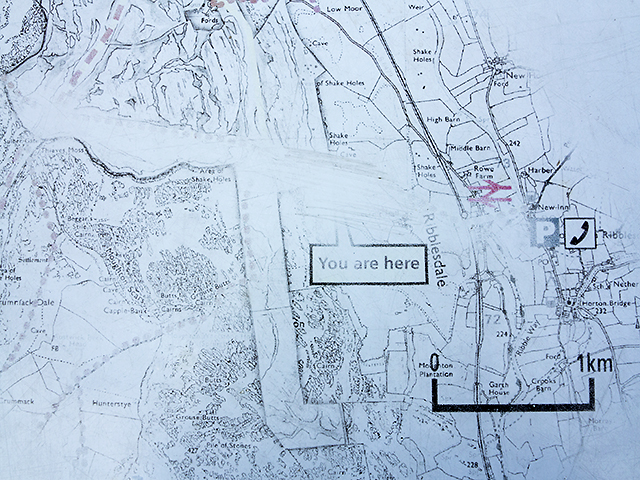


 The Way Home
Leave a comment