So This Is Christmas

(Over the next eight days, I’ll be posting devotional thoughts to help us gain a renewed vision of the wonder and glory of Christmas. My hope is that my – and your – celebration this year may be full of awe and admiration of our God and of his Christ.)

Where does Christmas Begin?

Where does the story of Christmas begin? It is not in the little town of Bethlehem, as we might suppose. Nor is it in the village of Nazareth, where Joseph lived and Mary received an angel messenger. No, the story of Christmas begins long before Joseph and Mary came on the scene.

If we are going to tell this story from the beginning, we are going to have to go east and we are going to have to go back: east from Bethlehem and back in time. We need to go to Eden, and even there we will not find the beginning of the story of Christmas, which lies in the heart of God, but we will get about as close as human observation can attain.

It was in the Garden, not the stable, that the Creator first became Immanuel (God with us). (“Then the man and his wife heard the sound of the LORD God as he was walking in the garden in the cool of the day…” Genesis 3:8). The Creator, a being of unimaginable power, who brought into existence the visible universe and, along with it, realities that are not visible (at least to creatures like us) was with humans: with them in ways they could readily perceive and in ways that caused them to flourish. He was Immanuel.

The Creator made the earth to be a place that would beautifully and remarkably sustain biological life. It was perfect. And on the earth, he made a place (Eden) that was supremely suited to a particular kind of biological life: the human. He placed two humans, a man and a woman, in that ideal environment.

The powerful and wise Creator had a plan. Biologically, he made the humans so that they could mate and multiply and fill the earth. Spiritually, he designed them so that they and all their descendants would resemble the Creator himself.

The powerful and wise Creator had a plan. Biologically, he made the humans so that they could mate and multiply and fill the earth. Spiritually, he designed them so that they and all their descendants would resemble the Creator himself. He gave them characteristics that mirrored his own (appropriate to their biological form, of course) and bestowed on them the responsibility of serving as his regents to rule the earth. The Creator said, “Let us make man in our image, in our likeness, and let them rule over … all the earth…” He gave them dominion over everything on earth. The Creator’s plan was to set up images of himself (humans) all over the planet – and who knows, perhaps someday all over the galaxy – to represent him. They were to care for the planet and for all its creatures as his representatives. Think of the earth and the universe as a kingdom, the Creator as king, and the humans as the king’s chosen regents.

The man and woman in the garden were being prepared for that high, holy calling. We don’t know how long their preparation in in the garden was intended to last – for all we know they may have been there for a hundred years – but their preparation included one restriction. They were given free range of the entire garden and access to all its bounty, except for the fruit of one particular tree, known as the tree of the knowledge of good and evil. Of that tree they were not permitted to eat – at least, not at that point in their preparation. Perhaps later in their training that would have changed.

But as time went on the man and the woman – Adam and Eve – chose to go their own way, and their way was a long and disastrous detour. Instead of serving as the Creator’s representatives, as regents of the King of the Universe, they chose their own path.  They did not want to rule under God, they wanted to rule beside him. They didn’t want to wait to be prepared. They decided to take a shortcut. They chose to believe that they would be better off – happier, more fulfilled, more who they were meant to be – if they were autonomous. They decided that they knew better than God, which is the same mindset that is behind all our sins. When humanity’s progenitors ate the fruit, they were not acting like naughty children but like rebellious conspirators and, at least to some degree, they knew it. What happened in the garden was not a slip but a jump that turned into a fall.

Posted in Christmas, Spiritual life, Theology | Tagged , , | Leave a comment

I AM the Way, and the Truth, and the Life

It’s the evening before Jesus’s execution. The day – the entire week – has been filled with conflict and high drama. Jesus and the Twelve have just eaten the Passover Seder, which was different from any Passover meal they had eaten before.

Following the meal, Jesus says something that shocks and frightens them: he won’t be with them much longer. He is going to leave and they can’t go with him (John 13:33). So Peter asks Jesus where he is going. When Jesus’s answer doesn’t satisfy him, he asks: “Why can’t I go with you?” Though Jesus does not directly answer his question, he makes it clear that he must travel the path that lies ahead alone. Neither Peter nor the rest can accompany him.

It was in this setting that Jesus spoke the now famous words: “Do not let your hearts be troubled.” But their hearts are troubled. When Jesus says, “You know the way to the place I am going,” Thomas gets frustrated and blurts out: “We don’t know where you are going, so how can we know the way?”

Jesus’s answer to that question unveils the sixth of the seven great I AM statements in the Gospel of John: “I am the way, and the truth, and the life.” If these men could understand this, they would be able to keep their hearts untroubled. They would be able to trust God. If we could understand this, we could do the same.

Posted in Sermons, Theology | Tagged , , | Leave a comment

The Wisdom of Humility and the Humility of Wisdom

The great English New Testament scholar F. F. Bruce counseled his readers to avoid being dogmatic about issues. If one is right, he pointed out, dogmatically defending one’s position does not make it any truer nor is it likely to convince others. It usually has the opposite effect. If one’s position is mistaken, being dogmatic can only be harmful.

F. F. Bruce understood that even the brightest of us still “sees through a glass darkly” and only the best of us remembers that fact and holds positions humbly. Only God sees things as they are—and we are not God. Though we can see things truly, we cannot see them wholly. To insist that we do is to make fools of ourselves by making believe that we are equal to God.

As I write this, I am looking over the top of my computer screen, out the window, and across the road at a barren elm. What I see is a vase-shaped, leafless tree, jostled slightly by the wind. Its trunk has a bald spot, where the bark has fallen away. I know that morel mushrooms sometimes grow around dying elms in the Spring. I know that splitting elm for firewood is a lousy job.

Yet there is more about that tree that I don’t know than I do. I do not know how old it is. I do not know how deep its roots are. I do not know its molecular structure. I cannot see its atomic bonds. I don’t know what the squirrels that chase each other through its branches sense when their feet grip its bark. I don’t know the degree to which is contributes to the replenishment of the ozone layer. I know some things about that tree, but I do not know it as God knows it.

The tree serves as a basic example of the limits of my knowledge. More complex examples would include politics, economics, philosophy, metaphysics, and personal relationships, to name a few. My knowledge, even when true, is always limited – usually more limited than I realize. This is true of all our race, a fact the wise do not forget.

God intends to greatly expand the limits of our knowledge one day. St. Paul, who wrote, “Now we see through a glass darkly,” immediately added “then” – in a future age – “we will see face to face. Now we know in part. Then we will know, even as we are known.” Imagine what it would be like to look at the elm tree and take it all in – the feel of its bark on squirrels’ feet and the structure of its atomic constituents. Perhaps that awaits us.

Until then, we are in great need of what St. James called “the wisdom of humility.” We are still children, in terms of our development as eternal spiritual beings and our understanding of the world. We have not yet matured.

My grandson Phin is a bright four-year-old. One day in the Spring, he saw a bug on the ceiling at his house and wanted to catch it. His mom said, “I’ll have to vacuum it up.” Phin asked, “How does it get up there?” My daughter-in-law, thinking he was talking about the bug, said, “They fly.” Phin looked at her in amazement and said, “Vacuums fly?”

I’m pretty sure the same kind of thing happens to us. Because our knowledge of the world around us and the God above us is limited, we assume things to be true that are not and vice-versa. This is certainly the case when it comes to biblical knowledge. While we can know the meaning of the Bible truly, we cannot know it completely. Some of our interpretations will likely be as far off base as Phin’s interpretation regarding flying vacuums.

The same is true in other fields of knowledge, whether physics or biology or cooking or sports. We can know many things truly – this assurance is vital – without knowing anything completely. This calls for a broad curiosity about our world, a deep humility about ourselves and an unfailing respect for our peers.

Previously published by Gatehouse Media

Posted in Theology, Worldview and Culture | Tagged , , , | 2 Comments

The Good Shepherd, Part 2 (John 11)

We’ve got to learn to live backwards. That is, we need to learn to live out of our future and not just out of our past. Most people are driven by the unalterable past into an unknowable future, but Jesus’s people can be pulled into the future by the call of the knowable – though always more than comprehensible – God.

People who are driven by the unalterable past are frequently filled with regrets over former days and fears over future ones. They are haunted by would-haves, could-haves, and should-haves and threatened by might-be and could-be possibilities. Only people who learn from Jesus how to live out of the future can be fully alive in the present

That future can be summed up in a word. No, it’s not “heaven”; it’s “resurrection.”

Jesus reveals himself to his friend Martha (and to us) as “The Resurrection and the Life.” To know him in this way is to transform our past, present, and future.

Posted in Sermons, Spiritual life, Theology | Tagged , | Leave a comment

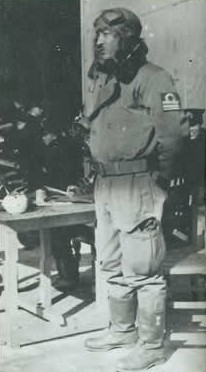
The Man Who Led the Attack on Pearl Harbor

December 7th is the anniversary of the 1941 Japanese surprise attack on the U.S. naval base at Pearl Harbor in 1941, a day which, according President Roosevelt, would live in infamy.

My friend Hugh Hansel was an adolescent in 1941. He had gone fishing on a sunny Sunday in northwest Ohio and, when he returned home, he found the adults agitated and fearful. Over the next couple of years, Hugh watched older schoolmates go off to the war. He saw how they and their parents wept at their parting, and his young heart developed a deep hatred for the Japanese.

Fast forward to the next decade. Hugh had himself seen combat in Korea. After returning home, he and his wife Phyllis moved to Upland, Indiana, to attend Taylor University and pursue a degree in education. While he was there, it was announced that Captain Mitsuo Fuchida, the man who led the attack on Pearl Harbor, would be on campus to speak. Signs began going up around Upland, calling on people to boycott Fuchida’s speech.

But Hugh wanted to see the monster who had attacked an unsuspecting enemy. He was filled with hate toward the Japanese generally and toward Fuchida in particular. Yet, by the time Fuchida’s speech ended, he had experienced a complete change of mind. He waited for Fuchida, not to give him a piece of his mind but to shake his hand.

The story he heard Fuchida tell was remarkable. Because of his success in the war in China, Fuchida was chosen to lead the attack on Pearl Harbor. Over Pearl Harbor, his plane was hit by anti-aircraft fire and returned to base with 21 holes and an elevator cable that dangled by a single thread. He had evaded death by a hair.

Fuchida was again to lead the attack on Midway, but he suffered appendicitis and was forced to remain on the aircraft carrier Akagi. A dive bomber from the USS Enterprise scored a direct hit on the Akagi and Fuchida was injured. He was rescued from the smoking deck, transported to a destroyer, and taken back to Japan to recover. None of the squadron he was supposed to lead that day returned. Fuchida survived again, seemingly by chance.

Because he was injured, he was assigned to a staff position with Vice Admiral Kakuta. Just weeks before the American invasion of Guam, Fuchida was ordered to Tokyo. When the Japanese effort to repel the invasion failed, the Vice Admiral and all his staff committed seppuku – ritual suicide by disembowelment. Again, Fuchida was spared.

He was then sent to Hiroshima. On the evening of August 5, 1945, he was abruptly ordered to attend a briefing 500 miles away. The next morning, the Enola Gay dropped “Little Boy,” the atomic bomb that killed tens of thousands instantly and tens of thousands more in the ensuing months. Fuchida was immediately sent back to Hiroshima to assess the damage. Everyone on the team died of acute radiation poisoning, except him.

Following the war, Fuchida met a soldier he had served with who had just been released from an American POW camp. He was surprised to hear that he had been well-treated and shocked to learn that one of the people caring for him was a woman whose missionary parents had been murdered by the Japanese.

Later, when ordered to testify at the war crimes trials (which he considered a travesty of justice), Fuchida was handed a tract written by an American prisoner of war, Jacob DeShazer, who had come to faith in a Japanese POW camp. DeShazer had undergone a radical change, from hatred for his captors to genuine concern for them. Fuchida himself eventually came to faith in Jesus and became an evangelist. He traveled to Hawaii many times, where he mourned for those who died at Pearl, and told the survivors about how Jesus can change hatred to love.

That is what Fuchida was doing when my friend Hugh met him at Taylor. A shared commitment to Jesus broke down the barrier between them and replaced their hostility with respect. It is still doing so today, in race, family, and working relationships—even in our fractured, fractious world.

First published by Gatehouse Media.

Posted in In the News, relationships | Tagged , , , , | Leave a comment

I AM the Resurrection and the Life

I love books and libraries and bookstores – especially used book stores. I like the feel of uncoated paper against my fingertips and the smell of old leather covers that linger in the air.

I have been helped in my life as a disciple of Jesus more than I can say by books. A.W. Tozer was my guide, as was A. B. Simpson. The unknown author of The Cloud of Unknowing, William Law, Brother Lawrence, Julian of Norwich, F. B Meyer, Andrew Murray – how they all helped me. C. S. Lewis rose through the clouds like the sun after a storm. Chesterton, Kreeft, Williams, Willard, Foster, Wright – the names go on and on.

I have learned much from these people – my debt to them is too great ever to repay. But all those who have helped me most have helped by bringing me into an encounter with Jesus, not just an idea. Books and authors, as much as I treasure them, are not and can never be a substitute for Jesus. At their best, they lead to an encounter with the real Jesus is real life.

Real life – our real life, with all its joys and sorrows – is where we meet Jesus. It is where Martha and Mary met him – in the midst of the biggest crisis of their lives – when Jesus introduced himself as the Resurrection and the Life. Read John 11 and get ready for an encounter with Jesus.

Posted in Sermons, Spiritual life | Tagged , , , | Leave a comment

Invited to the Dance of Grace

Photo by Anastasiia Ostapovych on Unsplash

In 2018, MarketWatch reported that the average Christmas shopper racked up $1054 of debt. If that average shopper made minimum payments on his or her credit card, it would take approximately six years to retire their Christmas debt.

It seems, according to statistics reported in Investopedia, that experts expect the average American to spend more this Christmas than the average American expects to spend. This means that millions of American who are still trying to pay off debts from previous Christmases will once again be adding to their debt load.

The old adage, “You can’t spend what you don’t have,” turns out to be less than the whole truth. Unless our payments are late, card is maxed, or credit is revoked, we can spend what we don’t have – for a while.

Is credit extended in other areas of life? For example, can a piano student play beyond what she has practiced – can she play on credit? If she has put in 50 hours of practice, can she play with 200 hours of experience? Can she borrow on what she does not yet have?

What about in the spiritual realm? Can I spend compassion that I don’t have? What about wisdom? Discernment? Will I have endurance that I have not bought through the testing of faith in times of trial? Is there any credit extended in the spiritual realm or is it strictly pay as you go?

The Church’s answer, based on the inspired writings of St. Paul and other biblical authors, is yes: credit is extended. However, that credit is not based on what an individual is likely to earn but on God’s mercy and Christ’s costly sacrifice – the full faith and credit of the Son of God. This is more than we could ever hope for based on our very limited personal resources.

The theological term for this is grace. Preachers sometimes describe grace as a heavenly bank account, fully funded by Christ, from which his people can always draw. This is in some ways a helpful illustration but is potentially misleading.

It is misleading if one thinks that grace applies solely to the forgiveness of wrongs, which is like thinking the only reason to have money is to pay off debts. Grace would be needed even if we had no wrongs that required forgiveness. It is needed to do right in an interactive relationship with God.

Grace, as Dallas Willard put it, “is God acting in our life to do what we cannot do on our own.” Certainly we cannot do forgiveness on our own, but our incapacity hardly ends there. We need grace to engage with God in the creative work of becoming who we were made to be and, simultaneously, blessing the world. The person who lives by grace is not content with his own forgiveness but is passionate about serving God in the world.

What this means is that grace, like the biblical manna, cannot be hoarded. It must be used. Credit is extended in the form of grace (God’s action in one’s life) to anyone and everyone who will use it. It is not extended to those who intend only to sit on it.

Sometimes we get the idea that grace is opposed to effort, but this is not so. Grace is not opposed to effort but to merit. Grace fuels effort. It funds it. People living interactively with God are constantly drawing on grace to do the good and beautiful deeds they could not do on their own. Such people are under no illusion of having merited the results, yet they also know the results would not have been achieved apart from real effort.

This interplay of human effort with divine empowerment, the dance of grace, has been God’s intention all along. He invites us into the dance, to receive so we can give, to give so we can receive even more.

The Bible describes the interplay of grace and effort as a “fellowship” or “partnership” with God. The word evokes an image of business partners but perhaps dance partners, though unconventional, is still appropriate: caught up in the eternal dance, in which God always leads and we, when we follow, do more than we thought possible.

First published by Gatehouse Media

Posted in Faith, Spiritual life | Tagged , | Leave a comment

I AM the Good Shepherd (Part 2)

In this short sermon, Jesus introduces himself as the Good Shepherd. If you are a sheep, you have only a few possibilities: You have a good shepherd; you have a bad shepherd; or you have no shepherd.

In A Shepherd Looks at Psalm Twenty-Three, Philip Keller writes about his time as a shepherd in east Africa. The tract of land next to his was owned by an absentee landlord and run by a manager – a contract employee type – who was supposed to care for the sheep. But they were sickly, skinny (the land was overgrazed) and beset by predators. Keller says that those poor sheep would stand across the fence and just stare into his green pastures and at his healthy sheep. It was as if they hoped some good shepherd would free them from the abusive one with whom they were stuck.

We have a Good Shepherd who frees us, cares for us, and makes us his own. Read about him in John 10:11-18 and then listen to this encouraging message.

Posted in From the Pulpit, Sermons, Theology | Tagged , , | Leave a comment

How to Give God a Five-Star Review

The Bible has a great deal to say about gratitude and often links it with God’s glory. This is understandable since our opinion of God is linked to our opinions of the people who believe in him. What we think about God will depend, in part, on whether our acquaintances who believe in him are grateful.

For this reason, a believer who is content and grateful will impact people very differently from one who is always complaining. It is no wonder St. Paul ordered Christians to “Do everything without complaining and arguing … Live clean, innocent lives as children of God, shining like bright lights in a world full of crooked and perverse people.”

Most of us know someone who has almost ceased being a complainer and is now not much more than a complaint. Every word from their lips, every look on their face, is tinged with resentment: People have let them down; life isn’t fair; the future is bleak. When such a person professes faith in God, people who know him or her can only assume that a life of faith is a bad investment.

The complaining believer is a zero-star review for God. The grateful person, on the other hand, gives God five stars. The person “overflowing with thankfulness,” as St. Paul describes it, is the best publicity there is for God. Thanksgiving advertises God. It overflows, as Paul says, “to the glory of God.”

Sincere believers who understand this might regret the complaining they’ve done and decide to be more grateful. But this is getting the cart before the proverbial horse. The place to start is not with what one must do but with what one must know. Grateful people know two fundamental truths about God: “…that you, O Lord, are strong, and that you, O Lord, are loving.” They have not only grasped these truths; they have been grasped by them.

God is strong. An ungrateful person testifies that God is weak. His God is not “the God of Abraham” and “the Fear of Isaac,” whose name is “great and awesome.” His God is not the Lord who “is enthroned as king forever.”

The second truth is that God is loving, which is to say he wants and pursues what is good for people at all times. The God of the ingrate is not loving, not the one “who so loved the world that he gave his only begotten Son.” To become a grateful person, these two fundamental truths about God – that he is strong and loving, great and good – must become part of the fabric of one’s thinking.

The Bible rehearses these truths again and again. For example, “that you, O Lord, are strong” is the theme of Psalm 136, repeated in nearly every verse. He is the God of gods, the Lord of lords, and the worker of wonders. He created the universe. He entered into history and redeemed a people. He swept away Pharaoh’s army and struck down kings. He is strong.

But he is also loving. If the psalm’s theme is that God is strong, its refrain is that God is loving – the two truths that all consistently grateful believers know. Psalm 136 repeats that refrain – as if to drive it home – twenty-six times: “His love endures forever.”

To believe in God’s love means to believe that he intends our good, in every situation, no matter what. Without this belief to anchor the soul, gratitude will come and go with the changing winds of circumstance.

There is no circumstance in which God does not seek our good, but we must be clear about what that means.  If by “good” we mean merely comfort, success, or pleasure, it will appear to us that God is not always seeking our good, just as it appears to a five-year-old that his parents are not seeking his good when they deny him candy before dinner.

Comfort, success, and pleasure are like candy: good alongside a loving and transformative relationship with God; bad as a substitute for it. The loving and strong God is committed to that relationship. When we are also committed to it, we can be confident and grateful, even in difficult circumstances.

First published by Gatehouse Media

Posted in Spiritual life, Theology | Tagged , , , | Leave a comment

I AM the Good Shepherd

It is wintertime and Jesus is walking in the historic Portico of Solomon on the east side of the temple courts. In an orchestrated effort, some of the Judean leaders and influencers encircle Jesus so he cannot slip away. They order him to tell them whether or not he is the Messiah. Jesus’s answer at first seems baffling. He responds: “I did tell you.”

When did he tell them? Did they miss it? Did we? Is it possible that Jesus tells us things today and we miss what he is saying?

Posted in From the Pulpit, Sermons, Theology | Tagged , | Leave a comment