
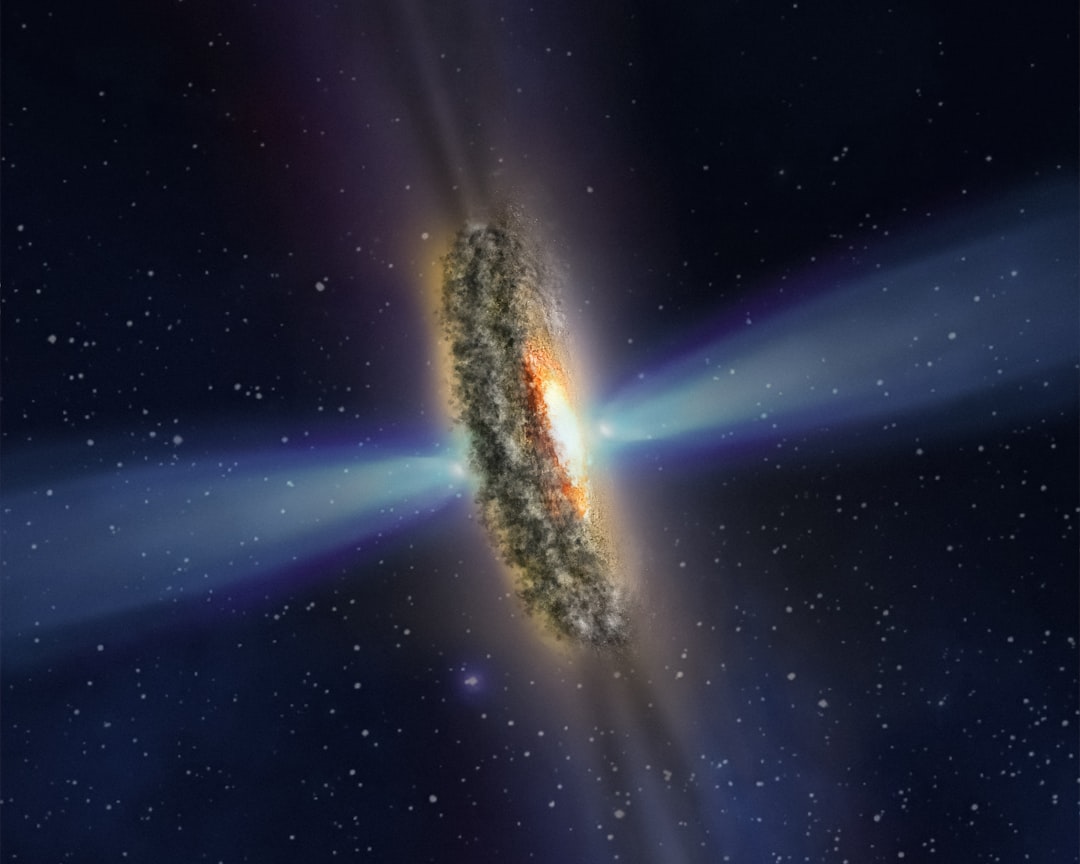
Scientists tell us that the entire universe came into existence in an instant from a single point (“singularity” in cosmological lingo), but according to the Bible, the entire universe came into being from a single person. Christ is the singularity out of which the first creation sprang and from which a new creation is emerging. He is the door between the spiritual and the material, between the eternal and the temporal. It is a door that opens both ways, allowing the material to come out of the spiritual and the spiritual to come out of the material.
In 2 Corinthians 5:17, the Apostle Paul says that anyone “in Christ” is a new creation. Do you see what that means? It means that the new creation has already begun. Jesus’s resurrection marked day one of the new creation. As Chesterton put it, on the third day when the disciples came to the empty tomb, “even they hardly realized that the world had died in the night. What they were looking at was the first day of a new creation…”[1]
Just like the old creation, the new creation comes into being through Christ: “Through him all things were made; without him nothing was made that has been” – or ever will be – “made” (John 1:2). Both the old creation and the new come into existence through Christ. We live in a historically unique period, the period of overlap between the old age and the new. The old creation is hanging on while the new creation is coming in.
What is true of this unique period is also true of us who have the Spirit of Christ: the old person we once were is hanging on at the same time the new person is emerging. The Christian lives in the overlap period between the old age and the new, and the overlap between old and new age lives in the Christian.
That can be frustrating and tiring. Becoming a new person, or as is more like it for Jesus’s followers, growing into the new person we already are, does not happen without our participation. God, remarkably enough, has given us an important role in the process of our own new creation. That role, limited as it is and completely dependent upon what God has already done, bestows a dignity upon us that we have not merited. But then, how could it be otherwise, since everything is of grace?
We cannot yet comprehend the new person we are becoming, any more than the infant can comprehend the mature adult she is becoming. The only way to understand is to become, and becoming seems such a slow process (though it will speed up enormously at the resurrection). Bonhoeffer says of the Christian: “…their true life is not yet made manifest, but hidden with Christ in God. Here they see no more than the reflection of what they shall be … They are still hidden from themselves, and their left hand knows not what their right hand does … But when Christ, who is their life, shall be manifested, then they too shall be manifested with him in glory.”[2]
In order to play our role in this new and (according to St. Paul) glorious creation, we must be connected to the massive power source that lies behind creation, a power source that is also a person. We must connect to Christ.
When we do so, he conducts power to us. We do not fully understand how, but it comes to us through the Holy Spirit. This power, unlike electrical or nuclear power, is animating by nature. It supplies the new creation’s life and vitality.
Paul writes about this new creation to the Ephesians, where he states that we “are God’s handiwork” (workmanship, “masterpiece” per Hoehner), “created in Christ Jesus to do good works…” Paul is here talking about God’s new creation, which, like his first creation, is accomplished “in Christ Jesus.”
The phrase translated as “to do good works” in the NIV is worth contemplation. In Greek, a more literal rendering might be “on” or “upon” (Gk., epi) “good works.” Protestant interpreters go out of their way to say that the good works do not make a person a new creation, but rather the person who is a new creation does the good works.
Nevertheless, our participation in the good works God has prepared may contribute to the completion of this new creation. Though we are already a part of the new creation by virtue of new birth/regeneration, we are not yet completed, as many New Testament passages demonstrate (Philippians 3:12; James 1:4; 1 John 2:5). God has given us the honor and privilege of participating in our own completion.
How? By, among other things, walking in the good works he has prepared for us to do. By recognizing them and doing them. We don’t do these good works in order to be completed but because we trust in God, yet in doing them, God’s work in us is advanced. But it must be remembered that it is God’s work, not ours. We are graciously allowed to participate in it, and our participation makes a real difference. But God is the one who prepared good works that fit us perfectly. He is the one who prepared us for those good works. He is the genius behind the new creation.
Finish, then, thy new creation;
Pure and spotless let us be;
Let us see thy great salvation
Perfectly restored in thee;
Changed from glory into glory
Till in Heav’n we take our place,
Till we cast our crowns before thee,
Lost in wonder, love, and praise!
(Charles Wesley, 1747)
[1] G. K. Chesterton, The Everlasting Man, part 2, chapter 3.
[2] From Dietrich Bonhoeffer’s sermon, “Risen with Christ” (Colossians 3:1–4).


Leave a Reply