
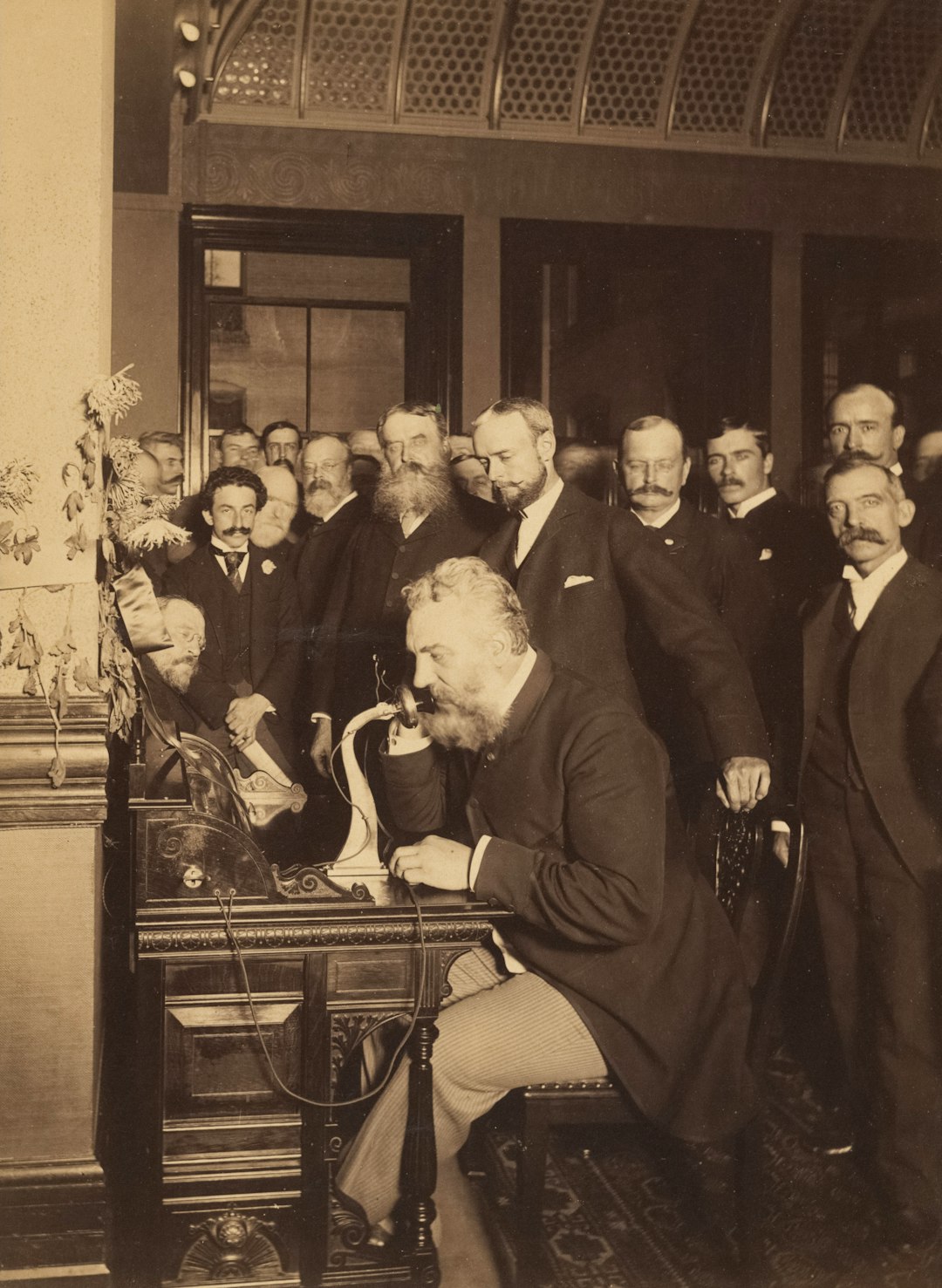
When Alexander Graham Bell tried to sell the patent on his telephone to Western Union, the telegraph company’s executives told him the telephone had no future. But Bell believed in his idea and started his own company – Bell Telephone – and the rest is history.
In the 1950s, the computer industry in the U.S. was just getting a toehold. Even inside the industry, experts assumed that computers would only appeal to large corporations and would never amount to more than a niche market. Ken Olsen, who founded his own computer company in 1957, said, “There is no reason for any individual to have a computer in his home.”
Great ideas are often underestimated at the time. Olsen could not imagine that anyone would want to own a computer, but he also never imagined that people would one day control their furnaces, refrigerators, ovens, and lights from a computer they carry in their pockets—a computer with more power than his room-sized, data card eating monstrosities. And Western Union never imagined that a telephone would be a computer. It often takes time for the value of an idea to be recognized and its potential to be realized.
It is that way with people too. We underestimate the value of individuals who originated as ideas in the mind of God. Yet the destiny of the universe hangs on what God has begun on our unremarkable little planet and in our ordinary lives. How can we look at our neighbors or even strangers and not see that they are a brilliant idea of the Creator?
I may have even more trouble seeing the brilliance of God’s idea when I look at myself. I know myself, after all, and I know that I am not anything special. I frequently get things wrong. More often than anyone knows, I have acted in selfish and stupid ways. Other people are smarter, better looking, and more capable than I am. God was off his game when he came up with me.
I wrote above that we have trouble valuing ourselves because “I know myself.” I know things my parents, teachers, friends, and spouse do not know. But to say “I know myself” is to grossly exaggerate my knowledge. I may know what I have thought, and done, and failed to do, but I have known these things in very specific and limited contexts. Yes, I lied in twelfth grade when my math teacher accused me of cheating on a test. But what was the context? It is far more complicated than I can possibly tell. What provocations incited me to do this? What psychological states of mind, developed from infancy, predisposed me to it? What if any of these had been different? Would I have still cheated?
I am not trying to explain away my guilt, still less am I trying to minimize sin. If anything, I am maximizing it. Sin is never simply an act I commit. It is bigger than my habitual actions (as anyone who has read St. Paul is bound to conclude). Sin is more dreadful than any of us realize. Nevertheless, my sins do not nullify the value of God’s idea when he made me. Perhaps I, by an ultimate embrace of sin, can make myself valueless, but nothing I do can ever make God’s idea of me less than perfect.
“Sin is more dreadful than any of us realize. Nevertheless, my sins do not nullify the value of God’s idea when he made me.”
The point here is this: I do not see enough of history or the ways others have impacted me to judge that God’s idea was flawed when he created me. But if I do not see enough of history, I see almost nothing of the future. The little of the past I do see is distorted by factors I do not comprehend, and I cannot see the future for it has “not yet appeared” (1 John 3:2).
You and I are ideas – God’s ideas – whose time is yet to come. When it does, everyone will be amazed—and no one more than you and me! When God made us, it was not for a mere 70 or 80 years but for the ages. He placed in us treasures that will only be discovered in the millennia to come (if “millennia” has any meaning when speaking of the coming age).
Alexander Graham Bell was told his telephone was a pipedream—no one was ever going to use it. Today, there are an estimated 400 million phones in the U.S. alone. And the computer that no ordinary person would ever want is now everywhere and running almost everything. These were ideas whose time eventually came.
You and I are also ideas (God’s), and our time is coming. When it arrives, we will know why God made us, why he made everything, and why he called the making of it “good” and “very good.”
And we will wholeheartedly agree.


Leave a Reply