When I was 23, I lost my job. Unemployment in my town was over 20%, and U.S. inflation was pushing 15%. It was a bad time. I went to the employment office, but they told me that I didn’t qualify for the jobs that were available because I had too much education. Eventually, I found work in a greenhouse that raised tomatoes.
It wasn’t my favorite job (nor my least favorite), but it provided a small income. One day, I made a pretty serious mistake. I asked the owner why tomatoes in the greenhouse don’t taste as good as those raised in a garden.
He gave me a penetrating look and said, in all seriousness, “What do you mean they don’t taste as good?”
I mumbled something and got away as quickly as I could.
I worked at the greenhouse long enough to plant tomatoes, prune tomatoes, harvest tomatoes, and cut down the vines to plant more tomatoes. Once we began harvesting, I realized it isn’t that greenhouse tomatoes can’t taste as good as garden-grown ones. The problem is that they are picked long before they ripen.
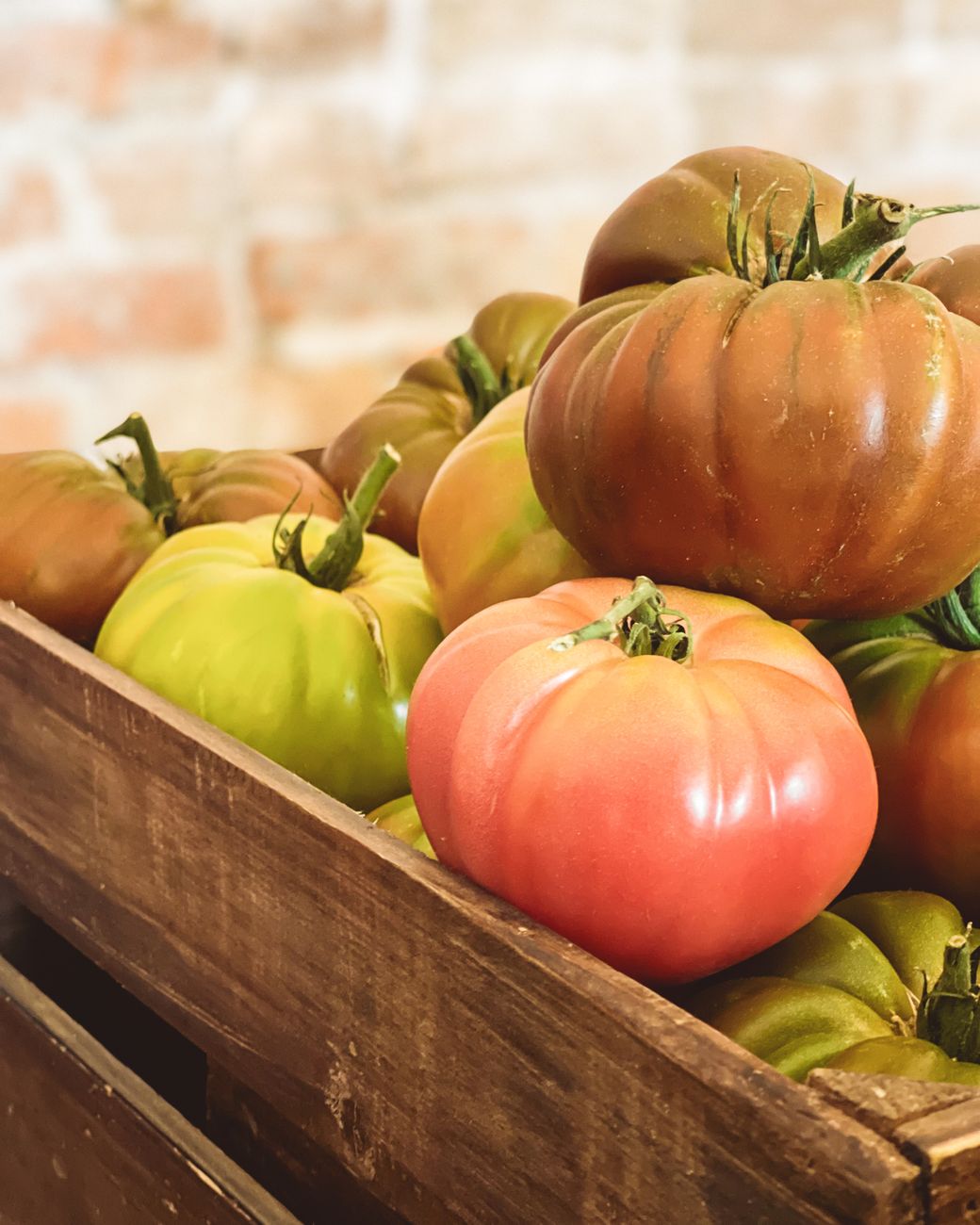
They are picked early because they need to be firm enough to pack into crates for shipping without bruising. In other words, they need to be hard. At the greenhouse, I was instructed to pick tomatoes as soon as they developed a blush spot—a little pink color—somewhere on the fruit. That tiny spot was enough to label them “vine-ripened.”
When the end of the season came and it was time to cut down the vines, the workers picked every remaining tomato of any size, even though they were completely green and hard as rocks. I asked one of the workers what good it was to pick tomatoes like that. He explained that they would be taken to a facility and gassed with ethylene, turning them a lovely red—or at least a terracotta pink—so they would look good on the shelf.
If you or I were to buy one of those tomatoes at the store, we might think it was ripe and ready to eat. I suppose it’s edible, though it’s an acquired taste. Good fruit needs to ripen on the vine.
When a tomato is allowed to ripen on the vine, it accumulates far more sugar. The plant’s leaves act like solar panels, using that energy to pump sugars and complex carbohydrates into the fruit. The result is a higher sugar-to-acid ratio—a sweeter tomato.
Not only does more sugar reach the fruit, but organic compounds also synthesize fully, creating aroma and flavor. Meanwhile, enzymes break down pectin in the cell walls, making the tomato juicy and tender. For this ripening process to unfold, there must be sun, rain, nutrient-rich soil, and time.
All of that goes out the window when you place unripened fruit in an ethylene gas chamber and spray it.
Tomatoes are not the only things that need to ripen. So do Christians.
Too often, the church bypasses the ripening process in favor of presenting “good-looking” Christians who never had the chance to develop—and may not even know it. Instead of growing naturally, they have been gassed with their church tradition’s substitute for sun, rain, nutrient-rich soil, and time.
Some traditions gas the unripe Christian with information: Bible knowledge, theological frameworks, and apologetics. This is the shortcut to good-looking Christians I know best. If a man reads N. T. Wright (or John Piper or John MacArthur, depending on the tradition), can explain the doctrine of original sin, and can remember a few lines from the Apostles’ Creed, we’ll make him an elder.
Other traditions gas people with ecstatic experiences—speaking in tongues, being slain in the Spirit—and if they turn red, we assume they’re ripe. Still others gas them with church attendance, tithing, and an assortment of legalisms.
The end result of these various treatments is a Christian who looks good on the outside yet is incapable of obeying “everything that [Jesus] commanded” (Matthew 28:20). They look good, but they don’t look like Jesus.
In her book Humble Roots: How Humility Grounds and Nourishes Your Soul, Hannah Anderson points out that Jesus refused to use these shortcut methods. Even on the eve of his crucifixion, he didn’t try to “gas” his disciples with last-minute truths. Instead, he told them, “I still have many things to say to you, but you cannot bear them now. When the Spirit of truth comes, he will guide you into all truth” (John 16:12–13).
Knowing the right answers does not make a person a fully ripened disciple of Jesus Christ, any more than ethylene gas makes a tomato ripe. As Anderson writes, “In God’s wisdom, the very process of learning binds us to him in a way that simply knowing answers”—and I would add, having experiences or keeping rules—“cannot. And so he asks you to trust him.”
Real spiritual maturity cannot be forced. It takes the sun of his presence, the rain of testing, the nutrient-rich soil of Word and church, and time.


Leave a Reply