Holy Week Meditation: Maundy Thursday

If you and I had been with the apostles on Thursday evening of that first Holy Week, this is the kind of conversation we might have heard.

“Sunday was the day. I could just feel it. People were ready. If he’d have called us to take Jerusalem back, thousands of men would have responded. Just the Galileans outnumbered Roman forces five to one, maybe ten to one. And the Judeans would have joined us. Oh, man, he had them in the palm of his hand. If he had said: “Today is the day we back the holy city from the infidels,” it would have happened right then. Instead, he started crying! Sunday was the day. I just don’t get it.”

“Yeah, Sunday was great, but Monday was the day. I mean, he single-handedly took control of the temple. He was a lion! No one could stand against him. And, look: It’s not enough to fight Rome. We can kill every Roman in Israel, but they’ll be right back unless we get rid of the aristocracy, the priests.

“Yeah, if he’d called people to arms on Monday, there wouldn’t have been a Roman left alive in the city by nightfall. By the time they heard about it in Caesarea, the entire countryside could have been mobilized. The aristocracy would be in prison. But instead of calling people to arms, he started teaching from Leviticus and the Psalms. I just don’t get it. What he is waiting for? The blacksmith doesn’t wait for the fire to die down before he forges the sword.”

The days leading up to the Feast were non-stop, edge-of-your-seat exciting. Each night was spent decompressing in Bethany, but each day was filled with conflict, tension and the prospect of revolution. On Sunday they marched into the city accompanied by cheering throngs. On Monday, Jesus took over the temple for an entire day. On Tuesday and Wednesday, he met one challenge after another, all day long. The priests, the teachers of the Law, the Pharisees, they grilled him, searching for a weakness, for anything they could use against him. It was almost like the High Priest inspecting the Passover lamb for a blemish. No, it wasn’t almost like that – it was just like that.

On Wednesday, Jesus stunned his disciples by telling them that the temple would be torn down, block from block and the city destroyed. Dumbfounded, they asked when this would happen, and what the sign of his coming would be? When we hear that, we think of Jesus’s coming at the end of the age – what we call the Second Coming, or the Return of Christ. And we assume that the disciples were thinking the same thing.

But they didn’t know about a second coming. They weren’t expecting a return of Christ; he was already with them. The word they used, Parousia, was used as a technical term in Greek culture to refer to the official visit of a king or ruler. When the Roman Emperor made an appearance in your city, it was called a Parousia. Jews used the term to refer to the ascendency of the Messiah and his conquest of the nations – especially the Romans. So when the disciples asked what will be the sign of your parousia, they weren’t thinking: how will people living 2,000 years from now know you are about to return? They were thinking: Tomorrow or the next day, when you make your move and declare yourself king, what sign will we have that it is time to act?

As Wednesday – and what a day that was – wound down and they all returned to Bethany, something happened that pushed Judas over the edge; at least that is what he told himself. He was already impatient and upset with the way Jesus was handling things. That evening, when Lazarus’s sister Mary broke a bottle of crazy expensive ointment and poured it on Jesus, he got mad and got everyone stirred up. “This is outrageous. It is offensive. And it is a terrible waste. We talk about helping the poor – well, this could have been sold for three-hundred denarii; that’s more than most people make in a year. Think of the good we could have done with that much money!”

Judas got the other disciples all riled up, and some of them were complaining too. Until Jesus told them: “Leave her alone –what she did was beautiful and will never be forgotten.” That was too much for Judas. He went out – the disciples probably assumed he was going to visit old friends; after all, Judea was his home – but instead he went to see the chief priests. He was furious. He felt mistreated. Nobody ever listened to him. They treated him like he was a second-class disciple.

But his motives were so knotted up that even he could not have told you what was going on in his head. He may well have told himself that Jesus was never going to take a stand until he had to; well, now he would have to. He’d be forced to fight, and the revolution would finally begin. And so, Judas was really doing him a favor. He worked it around, as people always do, to justify himself.

On the Day of preparation, Jesus told Peter (probably the oldest, and certainly the boldest of the disciples) and John, (the youngest and possibly the most introspective) to go into the City to prepare the Passover. But here is the weird thing: he didn’t tell them where they were going. It was like something out of a spy movie. He told them to go through the gate into the city and they would be met by a man carrying a jar of water. That was odd, because in that society, men didn’t carry water – that was woman’s work. They were to follow him right into the house he entered and ask the household manager for the guestroom where they could prepare the master’s Passover.

Why not just give them the address? Why all the secrecy? Because Jesus knew what Judas had done. If he had simply given them the address, the special guard would have had the place surrounded before he even got there. That would ruin everything.

When they arrived early that evening, Judas was jumpy as a cat. Did Jesus already know? Why else would he keep this place secret? When they entered the upper room, everything was ready. The low tables and the reclining couches were in place, and each disciple had been – as was Jewish custom – assigned a seat. To Judas’s surprise, he was seated right next to Jesus – one of the two places of highest honor. What was going through his mind when he saw that? Maybe he should call the whole thing off? But he’d already made a deal with the devil. If he backed out now, they would throw him in prison – or worse. What had he done! Was there any way out? His mind must have been going a hundred miles an hour, but he was trying to act like everything was fine. And here he was, sitting right next to Jesus! He would know something was wrong!

The table placement must have bothered some of the others too. Why was Peter, the leader of the disciples, not sitting next to Jesus? Instead, Judas and young John bar Zebedee had the places of honor. There must have been some trouble about this because, as the evening progressed, the disciples got into an argument about which of them was the most important – which would hold the most authority after the revolution.

Can you imagine how Jesus felt? After three years of teaching and modeling love and servanthood, these guys were arguing about who was most important! It was enough to make you throw up your hands in despair. But that is not what Jesus did. He didn’t throw up his hands; he took off his clothes, stripped down to his waist, wrapped a long towel around himself – looked just like a minor household slave – and began washing each of the disciples’ feet, including Judas’s. The disciples were mortified. Embarrassed. Jesus knew what they had been arguing about, and this was a rebuke.

But it was more than a rebuke. It was an object lesson. “So after He had washed their feet and had put his clothes back on and sat down at that table, he said to them: “Do you understand what I have done to you? You call Me the Teacher, and Lord, and you’re right – I AM. If then I, the Lord and the Teacher, have washed your feet, you also ought to wash one another’s feet. I have given you an example, that you should do as I have done to you.”

Not long after that, Jesus said to them: “One of you is going to betray me.” All of them – except one – were surprised. Each wondered – except one – if he would be the one. At this point, it hadn’t occurred to them that the betrayal would be anything other than a slip-up. The idea that one of them would intentionally betray Jesus hadn’t cross their minds – except, of course, Judas’s. As the meal was wrapping up, Jesus looked right at him and said, “What you do – do it quickly.” The others thought Jesus was talking about giving Passover alms before the day was through. Judas used the opportunity to run off and tell the rulers where Jesus was.

Can you imagine what Judas was thinking when he left? “He must know! But maybe he doesn’t! Maybe he wants me to give alms. But, if so, this is the first he mentioned it. He knows. He knows. He must know … but maybe he doesn’t.”

Jesus knew how long it would take Judas to reach the chief priests. He knew how long it would take for them to put together a strike force. He knew how long it would take for them to return. He was determined to use every moment he had, preparing his disciples for what was about to happen. He told them to love each other – it was the most important thing. He told them God would take care of them in his absence. He told them how the Holy Spirit would come into their lives. He talked to them about prayer. Warned them of trials. Assured them he would come back.

And while this was going on, Judas was walking as fast as he could to the government offices. He was afraid, confused, and angry. He kept telling himself that this wasn’t his fault; that he had no choice.

When he got there, he intended to give the rulers the location, get his money and leave. But they insisted he was coming with them. The first time he talked to the rulers, they treated him like he was someone important; showed him respect. Now they treated him like dirt – like a low-life traitor.

They told Judas to wait, and the waiting seemed to last forever. Every minute felt like an hour. When they finally got – for lack of a better word – a posse together, Judas had to lead them to the upper room. He was so worried that he couldn’t think straight. What would Jesus say? What would the apostles say – he’d spent three years, day and night, with them? There would be a fight. Some of them might be killed. Whatever else happened, Jesus would know Judas had betrayed him. He had burned his bridges.

As they approached the house, the commander sent people around back. When the place was surrounded, he and his men went quietly up the steps, burst through the door … and found no one. Jesus had timed it perfectly. He and the apostles were already gone, on their way out of the city to an olive grove on the side of the Mount of Olives.

The commander stared daggers at Judas. Suddenly, all this became very real and very dangerous. The commander snarled at him: “Where is he?” and Judas tried to think of where Jesus might go: Bethany, to Lazarus’s’ place? The temple? Where? Perhaps Judas suggested two or three locations. One of them was Gethsemane – the Olive Press.

Between the time Judas left them in the upper room and the time he found them in Gethsemane, Jesus was preparing his people. He told them that things were going to get tough and he was going to leave them, but he also told them they would have God’s Spirit and each other. They must stick together; must love each other – that was crucial. He painted them a dark picture of the present, but a bright picture of the future. He warned them that he was going away but promised he would come back. In the meantime, it was vital they remember and keep his teaching. They must obey his orders; they were their directions for living in God’s kingdom. He told them how to request help from God and promised them the Holy Spirit would remind them of all of this. Then he prayed for them to have unity.

It wasn’t long after that prayer, the Judas-led posse arrived, the disciples scattered, and Jesus was arrested. He was led off to a kangaroo court and, only a few hours later, the trial was over. Before the apostles even knew what was happening, Jesus was on his way to a state-mandated execution.

Everything he’d taught them that night and for the three years leading up to it, seemed to fly right out of their heads. They were terrified – for good reason: the chief priests had been trying to learn what they could about them – and horrified and profoundly, painfully, unimaginably confused. This just couldn’t be happening. It couldn’t be real.

But the things Jesus taught had not really flown away. They remembered now, in a way they could not have before, how Jesus took the unleavened bread and while he broke it he said, “This is my body.” They remembered how he held up the cup and said, “This is my blood of the New Covenant, poured out for you,” and had them drink it.

Just as the Passover gave Jews their identity as a people, this bread and cup identified the disciples as the new people of God, the people of Jesus. They did not understand – they would not understand until Sunday – but they had his promise that the meal they ate now in token they would someday eat in its fullness.

We have that same promise – we, the new people of God, the people of Jesus. When we eat this bread and drink this cup, we identify with him. We say – and choose yet again – to be the people of Jesus, in good times, in bad times, and for all times.
Posted in From the Pulpit, Holy Week, Sermons, Theology | Tagged , , , | Leave a comment

Join Us…

Join our (abbreviated) worship service at Youtube or on Facebook. Our sermon text is Philippians 3: Heavenly-minded and Earthly Useful.

God be with you all.

Posted in Church Life, From the Pulpit, Sermons | Tagged , | Leave a comment

The Stubbornly Silent Future: Learning to Trust

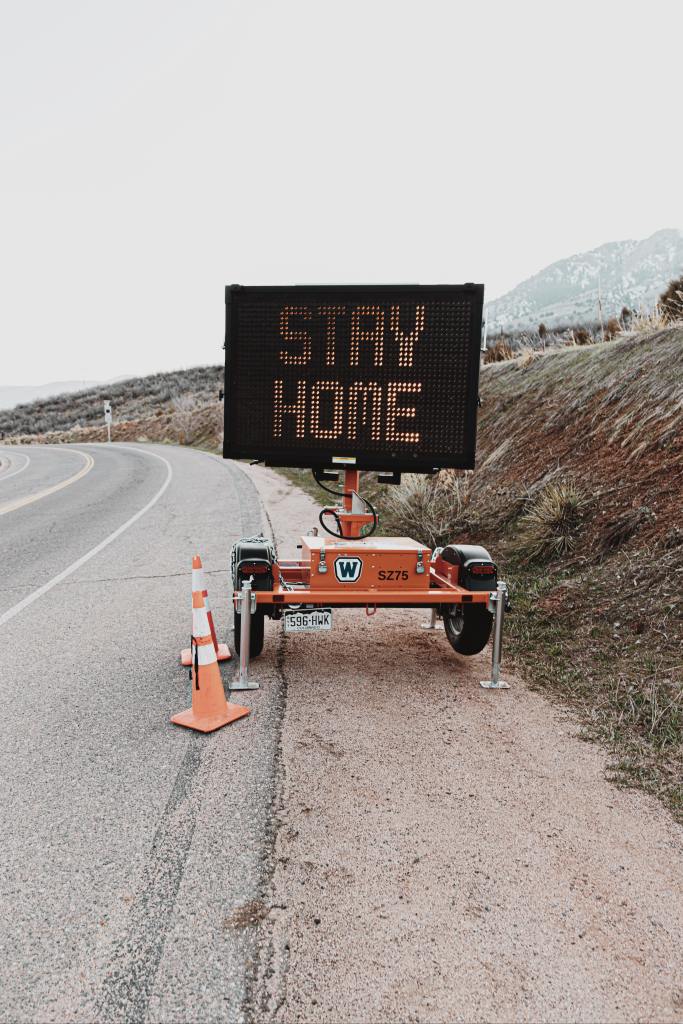
Our governor’s “Shelter in Place” order has changed the way we live. Rather than meeting people at church or in the coffee shop, I’ve been meeting people on Zoom. Pastoral visitation has not happened in people’s homes but on our phones. I and others have been calling our church family, checking on their health, and seeing if they need groceries or meds. Many of these members are older and, to a person, they are doing remarkably well. They are a resilient bunch.

Photo by LOGAN WEAVER on Unsplash

It turns out that many of our older members were spending most of their time at home, even before the governor’s order. The pandemic has not affected them in the same way it affects the soccer mom, who puts 25,000 miles a year on her van, or the retired couple who eat out five nights a week.

While our church family is doing well, the question on their minds, and on their friends’ and neighbors’ minds is: How long will this last? They want to know what’s coming next and when things are going to return to normal.

All of us have a sort of inner gravity that constantly pulls us back toward normal, even when normal is not healthy. When will things be normal again? Our routines, which always have suffered interruptions, have now been turned on their heads. Everything has changed.

The pandemic has highlighted the limits of our ability to control the future. When we are in our usual routines, we assume we know what is coming next. Now, we are painfully aware that we don’t. When normalcy finally returns, that awareness is likely to dissolve like a mist.

However, when the awareness of our limits dissolves, the limits themselves remain. As long as our routines are in full swing and our rhythms uninterrupted, we can overlook those limits. We may even congratulate ourselves that our crystal ball readings have been spot-on. Nevertheless, human beings are not, and never have been, good at controlling the future.

When I was a schoolboy, life suddenly changed in my household. My dad, who had been drinking and hanging out with a rowdy crowd, gave up alcohol. Previously, he was gone most evenings playing softball, bowling, or playing cards and, always, drinking. Now he was playing catch with my brother and me. We were going fishing together. We even went camping.

The future must have seemed brighter to my mother. It certainly seemed more orderly. We got into a routine of sorts. The uncertainty of the past was gradually replaced by confidence in the future.

It was short lived. Even at that time, unperceived by my parents, a white blood cell in my brother Kevin’s body was damaged and began growing and dividing uncontrollably. He had leukemia.

I don’t know how long this went on before my parents noticed something was amiss. For a while, life continued normally. Kevin seemed to have everything going for him. He was a gifted athlete, popular at school, and was loved by kids and adults alike. Then the sky came crashing in.

There was no warning that life was about to change. But that’s the way it is. The future only occasionally issues warnings. Usually, it is stubbornly silent. Our confidence concerning the future is built on shaky ground. Even now, some reader’s (or the writer’s) cells may be dividing uncontrollably, and there is no indication of what is coming.

If Covid-19 helps us come to terms with this fundamental uncertainty, we will have wrestled some good out of a bad situation. If we are able to replace a wispy confidence in the future by a secure confidence in God, we will stand on firmer ground. Oswald Chambers confessed, “Faith doesn’t always know where it is being led,” then added, “…but it does love and know the one that’s leading.”

It is ironic. When our routines are in place and we think we have everything in hand, our confidence in the future is set to betray us. But when our routines have been upended and we’re not sure what’s coming next, our confidence in God can enable us to face the future with courage and peace.

First published by Gatehouse Media.

Posted in Faith, Peace with God, Uncategorized | Tagged , , , , , | Leave a comment

Scapegoating, Responsibility, and Neighborly Love in the Plague

Here’s a very relevant article to the age of Covid-19 – a brief history of the church’s response to another pandemic – this one in the 14th century. There are lessons for us here, and I recommend it to you: https://sojo.net/articles/scapegoating-responsibility-and-neighborly-love-plague.

The writer is my son, Joel Looper (PhD, University of Aberdeen), author of the forthcoming book A Protestantism without Reformation: What Dietrich Bonhoeffer Saw in America (Baylor Press).

Posted in In the News, Theology, Uncategorized | Tagged , , , | 4 Comments

Cross Your Mind: The Humble Mind of Philippians 2

Visit Lockwood Community Church in Coldwater Michigan. The worship service is abbreviated (a few songs, prayer, and a sermon) for online worshipers. The message is from Philippians 2 and explores the kind of mindset that can enable us go through the trials of the Covid-19 pandemic while maintaining grace and extending blessing to others.

Posted in Uncategorized | Leave a comment

Pray for Your Pastor During the Covid-19 Crisis

Your pastor needs prayer right now. He is facing significant stressors, making decisions that may have far-reaching consequences, and handling questions from concerned parishioners for which he may not have answers.

Photo by Ben White on Unsplash

I spend the first hour-and-a-half of each day in my study, doors closed, a cup of coffee in hand. I reach for the Book of Common Prayer and turn to the Daily Office readings, bookmarked to the current week. After a brief prayer, I read the psalm of the day, the Old Testament reading, and the reading from the Epistles. About this time, I head to the kitchen for another cup of coffee or a cup of Earl Grey. Then I return for the reading of the Gospel.

I pray as I read. I reflect. Sometimes I make notes to myself. If I have time, I read from a helpful book. Over the years, I have used George Macdonald’s remarkable sermons, Dallas Willard’s and Richard Foster’s books, C.S. Lewis’s sermons and essays, and many more. Lately, I’ve been reading Scot McKnight’s Kingdom Conspiracy.

After the reading of the Gospel, I pray. Today it was a disjointed prayer of submission, adoration, and intercession. As I prayed, I found myself wondering why I have been feeling so anxious. I am not, by nature, an anxious person but the last couple of weeks have been stressful. As I thought about this before the Lord, three particular stressors came to mind.

I find making decisions very stressful when I don’t have sufficient information. During the Covid-19 crisis, I (and tens of thousands of other pastors) have had to make one decision after another: First it was, “Do we cancel in-person services?” Then, how long must we cancel in-person services?

The decisions just keep on coming. How do we communicate during this time? Do we live stream Sunday services? How do Family Ministry, Youth Ministry, Kid’s Min communicate? Do they live stream? How do we care for our most vulnerable population? What about our staff? Will they work from home? Will they have enough to do to occupy their time? Can they afford the time off? 

All this is uncharted territory. We do not have the facts, don’t know how long the social distancing measures will be necessary. We have volunteers calling our most vulnerable folks, many of whom are seniors, but we’ve discovered they don’t answer the phone if they don’t recognize the caller. Many have mailboxes that are filled or were never set up. How do we reach them? Each question demands a decision that itself requires a flurry of other decisions.

Another stressor for me is being around disagreements. From day one, the response to the coronavirus has been full of disagreements, even at the highest levels. Congress and the White House were hardly in lockstep when all this began. It’s been reported that the president and his own coronavirus task force are at odds. People’s response to the crisis largely depends on whom they are listening to, and our church people aren’t listening to the same authorities.

To every question, someone has a different answer. Should we cancel services? Before our governor banned gatherings of more than fifty, one would answer, “Of course. It is the only loving thing to do.” Another would say, “No way! We must not give in to fear.” In most churches, people look to the pastor for guidance during disagreements, but how does one guide when one lacks sufficient information?

A third stressor has to do with expectations for (or, more accurately, with efforts to influence) the decisions being made. There are always people who strive to get their way, thinking that their idea is best or their need most urgent. Of course, everyone’s need is most urgent to them.

All of this adds to the burden pastors carry for the church family they love. Pray for your pastors and let them know it. Look for ways to help your church family during this crisis. Reach out to the vulnerable with concern and help, including unchurched neighbors and friends. Churches that do this will not only come out on the other side of this crisis; they will come out stronger.

First published by Gatehouse Media

Posted in Church, Church Life, Prayer | Tagged , , | Leave a comment

Good News (in the middle of the mess)

Is there any good news in the middle of this mess? You bet! The same good news that has sustained the people of Jesus through many crises and continues to change the world. Read Philippians 1 and take note of every use of the world “gospel,” which means “good news.” Consider its context and think through how Paul was using the word. Then, listen to the message at one of the links above, and share your thoughts below.

Posted in Church, Church Life, From the Pulpit, Sermons | Tagged , , , | Leave a comment

Join Our Church's Worship Time

Like millions of others, we are streaming today’s (abbreviated) worship service. If you’d care to join us, just go to http://www.lockwoodchurch.org and click the link titled, “Click for Links.” It will give you links to both YouTube and Facebook. The service will begin at 11:00 AM EST.

The Lord bless you and keep you. The Lord make his face to shine upon you. The Lord lift up his countenance to you – smile at you – and give you peace. Amen.

Posted in Church, Sermons | Tagged , , | Leave a comment

Dealing with Isolation During the Covid-19 Crisis

In 2016, long before the advent of Covid-19, The New York Times ran a piece by a Dr. Dhruv Khullar titled, “How Social Isolation Is Killing Us.” “Social isolation,” Dr. Khullar wrote, “is a growing epidemic—one that’s increasingly recognized as having dire physical, mental and emotional consequences. Since the 1980s, the percentage of American adults who say they’re lonely has doubled from 20 percent to 40 percent.”

Photo by Kristina Tripkovic on Unsplash

What effect will the social distancing measures ordered by state and federal leaders to combat the spread of Coivd-19 have on this older and more pervasive social isolation epidemic? When it’s over, will people make an extra effort to connect with others following weeks of enforced social distancing? Or will these temporary measures have legs—will they continue on after the executive orders have expired?

Digital distractions have already replaced human interactions for many people in daily life. The coronavirus may exacerbate this new reality.

Experts say that about one in three people in the U.S. lives alone. Among those who are over 85, the number is more like one in two. Katie Hafner, reporting in The New York Times, writes that“studies … show the prevalence of loneliness among people older than 60 ranging from 10 to 46 percent.” Khullar states that “A wave of new research suggests social separation is bad for us,” impacting sleep, altering immune systems, and raising stress hormones levels.

Photo by Charles Postiaux on Unsplash

When isolation becomes the norm, outsiders become a threat—and for many people, isolation is the norm. Perhaps this rise in individual isolation is affecting a rise in national isolationism, as demonstrated in the heated immigration debate, ironically being waged on the internet by people speaking out of isolation. Future historians may identify the growth of isolation and isolationism as a major story of the 21st century.

The church has an alternative story to tell or, rather, the church is an alternative story. Instead of isolation, it is a story of community. Instead of division, it is a story of reconciliation. Instead of alienation, it is a story of inclusion. Instead of top-down charity, it is a story of side by side friendship. It is the story of Jesus, incarnate for, and in, his church.

This alternative story is first of all the story of the community-loving God who, according to Christian understanding, exists forever in the loving, blissful community of the Trinity. This God didn’t create the universe to satisfy some unmet need but to share the unending joy of the Godhead. In carrying out his intent, God became human and did what God always does: shared his love with others.

The ultimate example of this love is the cross of Jesus. As St. John wrote, “God so loved the world that he gave his only begotten Son…” Then God gave himself again: the other member of the joyful Trinity, known to us as the Spirit, came to live in people. Those people, now sharing one Spirit, were united into one people—the church.

In this divine comedy, that church, the church everyone knows – messy, incomplete, and sometimes just silly – has become part of the alternative story. When the church most fully embodies its divine calling to be the dwelling place of the joyful God, it becomes a prominent and glorious character in God’s story of community, reconciliation, inclusion, and friendship.

Though the church is brought into the story by the Author, it must be intentional about its place in the story. It must reflect the joyful God by being a people of community and by taking actions that demonstrate this to be true. The church, for example, might organize dinners and connection times for all its people. It might choose to be a place where forgiveness and reconciliation take place; where the outsider becomes an insider; where social status is relentlessly deconstructed as a barrier to friendship.

In an age marked by social isolation, the church can and must provide a striking alternative: a people who share an identity as family, who spend time together, forgive each other, and like each other. It can be a growing family, welcoming others in and helping them to find their place with their loving Father and the rest of the family.

First published in Gatehouse Media

Posted in Church, Church Life, In the News, Spiritual life, Worldview and Culture | Tagged , , | Leave a comment

Powerful Prayers: The One Who Is Able (Ephesians 3:20-21)

(Note: For a few weeks , I will post the manuscript that goes with the audio (posted Tuesdays) from a sermon in the Powerful Prayers series. People have requested the sermon manuscripts many time, but I’ve always been reluctant to make it available for two principal reasons: 1) I never simply read a sermon, so what people read is not exactly what I spoke. The manuscript might be better or it may be worse but it will be different. And (2) because the sermon has not been edited for publication. With those caveats, here is The Spirit of Wisdom and Revelation III (His Incomparably Great Power for Us Who Believe)

The One Who Is Able

(Ephesians 3:20-21) Now to him who is able to do immeasurably more than all we ask or imagine, according to his power that is at work within us, to him be glory in the church and in Christ Jesus throughout all generations, for ever and ever! Amen. 

*******************

We began the “Powerful Prayer” series eight weeks ago. Each week, we have looked closely into one or the other of the Apostle Paul’s great prayers for the church. What we have seen has been extraordinary. We have had a master of prayer – St. Paul himself – show us why he prayed and what he prayed. Yet our in-depth study of these remarkable prayers will make no difference if it doesn’t inspire us to pray.

If we’ve learned anything, I hope we’ve learned that God expects us to pray for the church, including Lockwood Church. I hope we’ve learned that praying for the church is critical. So, after two months of hearing about praying for the church, are we praying for the church? Have you prayed for Lockwood this week? Have you used what you’ve learned to pray for our church family?

I’ve met people who believe in God but don’t believe in prayer. They think God is going to do what he is going to do, whether we pray or not. That prayer is just a matter of adjusting our attitudes and expectations.

But I don’t believe that. I agree with Henry Emerson Fosdick, who said: “Now if God has left some things contingent on man’s thinking and working, why may he not have left some things contingent on man’s praying? The testimony of the great souls is a clear affirmative to this: some things never without thinking; some things never without working; some things never without praying! Prayer is one of the three forms of man’s cooperation with God.”

God has made room in his creation for us to be involved with him in ways that make a difference, and one of those ways – the most immediate of those ways – is prayer. If we pray, some good things will happen that would not happen if we didn’t pray. Some bad things won’t happen that would have happened if we didn’t pray. St. Paul clearly did not think his prayers for the church would make no difference, other than improving his own attitude and raising his expectations. If you had suggested such a thing to him, he would have thought you were mad.

The purpose of this series was not to stick more information in our heads but to send us to our knees with inspired prayers in our mouths. The church of Jesus – including Lockwood Church – is of enormous importance in God’s plans for the world and for our lives and we should be praying for it. If we do, some things will happen that would not otherwise happen. If we don’t, some things will not happen that otherwise would.

For example: remember Paul’s prayer for the Colossian’s Church. He prayed that God would give them the knowledge of his will through all spiritual wisdom and understanding so that they could live a life worthy of the Lord and please him in every way. How we need the knowledge of God’s will in this time. The elders and the admin board are making decisions about services – we need the knowledge of God’s will. If Covid-19 forces us to move online for a time, we will need the knowledge of God’s will to serve our church family, help people keep growing in grace, meet physical needs, and so on.

When God answers the prayer to fill us with the knowledge of his will, there are four enormously valuable outcomes. The first is fruitfulness in all the church’s work. Think of that. We are always doing work – our children’s ministry, family ministry, and youth ministry, just to name a few examples. We are working hard. To some degree, the fruitfulness of all that work will hinge on knowing God’s will, which in turn hinges on our prayers. The difference between fruitful labor and mere labor resides, in part, with our prayers.

Or what about praying for a knowledge of God’s will so that our people will be strengthened? Strengthened people, according to Paul, can endure. They can be patient. They can remain joyful. Our people are going through tough stuff. I was with someone this week who was suffering intense pain throughout our short visit. She needs to be strong to endure. Paul prayed for that.

Weak people won’t endure. Marriages will end. Church members will leave. Sunday School teachers will give up. Deacons will find something easier to do. If we don’t pray, we are not doing our part to help each other.

Watchman Nee said it well: “Our prayers lay the track down on which God’s power can come. Like a mighty locomotive, his power is irresistible, but it cannot reach us without rails.”

In the prayer in Ephesians 1, Paul asked God to give the Ephesians a spirit of wisdom and revelation in the knowledge of him. Have you and I prayed that prayer for Lockwood? For First Baptist, Bethel Gilead, the United Methodists, and our friends in other fellowships? What a difference it makes when I get up to preach, if God has given us the spirit of wisdom and revelation in the knowledge of him. Being able to receive revelation, to have wisdom concerning what God is like, what he can do, and what he wants changes everything.

The prayer we have been looking at in Ephesians 3, the prayer for strength to know the knowledge-surpassing love of Christ—how important that is in the midst of the coronavirus pandemic. What a difference we will make if we have grasped Christ’s love and been strengthened with God’s power. It will increase our courage, deepen our compassion, and make us stand out against the darkness of our society the way stars stand out against the darkness of the night sky (Philippians 2:15).

In one sense, it’s not our prayers that make the difference; it’s the God to whom we pray who makes the difference. He is able to do things that we cannot imagine, things that have never even crossed our minds. His power is beyond comprehension. Our best-case scenarios, our highest ambitions, and wildest dreams don’t come close to the reality of what God is capable of doing.

In Ephesians 3:20, Paul calls God (literally) “The one who is able.” Sometimes we talk about people that way: “She is a very able leader.” With God, we take that to another level.

“Able” translates a participle, the verbal form of the noun “power.” To be able is to have the power needed to accomplish something. The prayer Paul has just made is to the God who has the power to do whatever he chooses to do. His power is limitless, his ability boundless.

There are two other places the Bible speaks of God as “the one who is able” – Romans 16 and Jude 24. In the Romans passage, God is able to establish you – that is, to make you strong; to keep you stable and secure. We are wobbly – both physically and spiritually – but God is able to make us stand firm.

In Jude 24, God is the one who is able to keep you from falling. I have seen Christians fall spectacularly – fall into sin, into despair, into unbelief. What might have happened if they – and we – had prayed to the God who is able to keep us from falling?

Jude goes on: “and to present [us] before his glorious presence without fault and with great joy.” But we know ourselves too well. We are not without fault, but we are often without “joy,” certainly without “great joy.” Sometimes we are miserable. It seems impossible that we should stand before a perfect God without fault and with great joy. We can’t imagine it.

Precisely. Go back to our benediction: “Now to him who is able to do immeasurably more than all we ask or imagine…” We don’t see any way for things to work out, but we see a hundred ways for them to go wrong – a thousand if we keep looking. We just want things to be okay.

But God is not satisfied with okay. He is planning for perfect, planning for great joy. He is able (literal translation) “to do beyond everything, very far in excess of that which we ask or think.”[1]

You want God to get you out of a tough spot. He’s planning on getting you into heaven. You want to avoid embarrassment. He’s planning on bringing glory down on your head. You just want your kid to be okay. He wants your kid to be amazing. And he is able to do all those things. He is “the One who is able.”

You say, “But how? How is he going to do these things?” I don’t know how. No one knew, no one imagined – neither human nor angel – that God would present us without fault and with great joy through a horrible Roman cross—the cross of Jesus. No eye saw it, no ear heard it, no mind conceived it – except God’s. He is the One who is able!

His ability is very far in excess of anything we can ask or think. Listen to the words of St. Thomas Aquinas: “To one who has faith, no explanation is necessary. To one without faith, no explanation is possible.” The first step is faith—but not in God’s great power. We start by trusting his great love, manifest in the Christ of the cross.

Vance Havner put it this way: “…we miss so much because we live on the low level of the natural, the ordinary, the explainable. We leave no room for God to do the exceeding abundant thing above all that we can ask or think.”[2]

Look at verse 20 again: “Now to him who is able to do immeasurably more than all we ask or imagine, according to his power that is at work within us…” Wait a moment… This extraordinary power is not theoretical. It is already at work within us, or “among us,” as the Greek could be translated. In our church, among our people (even in our inner persons) that power is at work. Prayer plugs us into the power.

Philip Yancy was right: “If prayer stands as the place where God and human beings meet, then I must learn about prayer. Most of my struggles in the Christian life circle around the same two themes: why God doesn’t act the way we want God to, and why I don’t act the way God wants me to. Prayer is the precise point where those themes converge.”[3] Prayer is not only the point where they converge; in countless lives, prayer has been the point where those themes unite to become a story of power and beauty.

And of glory. Look at verse 21: “to him be glory in the church and in Christ Jesus throughout all generations, for ever and ever! Amen.” Some scholars have said that Paul could not possibly have written this because of the word order. They say that Paul never would have put the church before Jesus. But this is to ignore what Paul has just been writing about: the church is the showpiece of the unsearchable wisdom of God (Ephesians 3:10), put on display for the great spiritual powers to see.

Besides that, in Paul’s mind, the church is not – and can never be – divorced from Jesus. They are a package deal. People in our day often try to divide the church from Jesus. They say, “Well, I have faith. I’m just not into organized religion.” Or, “I believe in Jesus. I just don’t believe in the church.” Such people’s experience of Jesus will always be profoundly limited for Jesus is one with his church and lives on earth through his church. Yes, the church is unfinished and no one who loves the church is blind to its faults. But Jesus’s love and God’s power are expressed in the church and it is in the church that glory comes to God.

Especially, in times like this. More than ever, we must pray (Colossians 1:9-12) for the church to have the knowledge of God’s will. There is an opportunity in this moment for the church to serve God in the world and we mustn’t miss it. This Wednesday, pastors from our county are gathering to discuss how we can serve God in the church and in the world during the pandemic. We must pray (Ephesians 1:17-19) for the spirit of wisdom and revelation so that we may grasp the hope before us and the enormous value of the each other – God’s chosen inheritance in the saints. We must pray for power (Ephesians 3:14-21) so that we will be strong in this time of uncertainty, so God can fill us – his church – to all his fullness.

Will you pray? Will you pray earnestly, continually, confidently for God’s will in our church and the church in our county and country and world? Will you pray for the elders, deacons, and admin board, that we will be filled with the knowledge of God’s will and so serve him well, so that all of us will live courageously and fruitfully in this challenging time?

I close with the words of the great 19th century preacher Charles Spurgeon. Using a church bell high in the belfry as a metaphor for prayer, he said this: “Prayer pulls the rope below and the great bell rings above in the ears of God. Some scarcely stir the bell, for they pray so languidly. Others give but an occasional pluck at the rope. But he who wins with heaven is the [person] who grasps the rope boldly and pulls continuously, with all his might.”

Let us win with heaven. Let’s pull together and let’s pull hard. Amen.


(If you’re interested, check out a song I wrote about the One Who Is Able. Romans 11:33-36 served as the basis for the lyrics. Click this link https://shaynelooper.com/music/ and scroll down to “He Is Able.”)

[1] Harold Hoehner, Ephesians: An Exegetical Commentary, © 2002. Baker Books

[2] Vance Havner in the Vance Havner Quote Book. Christianity Today, Vol. 36, no. 14.

[3] Philip Yancey, Prayer (Zondervan, 2006)

Posted in Church, Church Life, From the Pulpit, Prayer, Sermons | Tagged , , | 2 Comments